Country Name Generator
Names for fantasy kingdoms, empires and fictional nations, each with a meaning, built on the same patterns that named real countries.
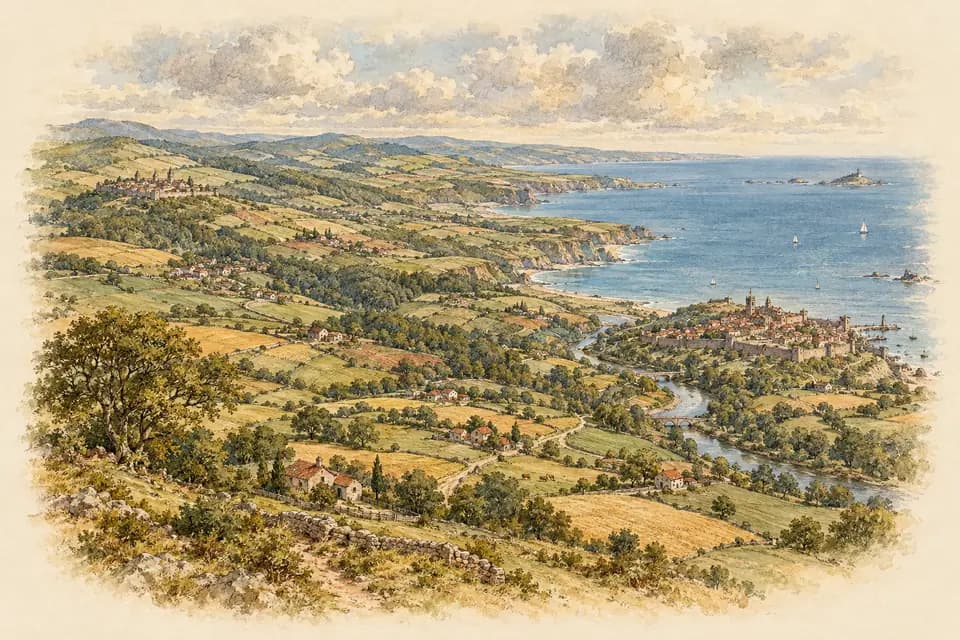
A few to start with
- EldoriaA magical land of ancient power
- DrakoriaA country inhabited by dragons and dragonkin
- AvaloniaA realm of enchantment and wonders
- NymphoriaA country where nature spirits dwell
- SilvermereA land known for its shimmering lakes
- StormholdA country enduring constant elemental storms
Understanding Country names
Real country names come from a handful of sources. Many come from a people: France from the Franks, England from the Angles' "Engla land." Others describe the land: Montenegro is "black mountain," the Netherlands are the "low lands." Some name a resource, like Argentina, from Latin argentum, silver. Iceland comes from a story: according to the Landnámabók, Hrafna-Flóki named it after seeing a fjord full of drift ice. Fantasy countries feel real when they follow the same logic.
Endings do much of the work. Latin -ia, as in Britannia and Gallia, sounds old and imperial. Germanic -land and -mark, as in Finland and Denmark, sound northern. Persian -stan, "place of," runs from Kazakhstan to Afghanistan. Fiction borrows the same toolkit: Tolkien's Gondor is Sindarin for "stone-land" and Rohan for "horse-country." Each name below comes with a meaning, and most will work for a kingdom, an empire or a republic.
How to come up with a Country name
Name it after its people
The most common real pattern is a people's name plus an ending. Start with the name your founding people call themselves, say the Varr, then try Varria, Varrland, Varrmark and Varrastan, and listen for which fits the culture. Then decide what the neighbors call them, because it is often different. Germans call their country Deutschland, the French call it Allemagne after the Alemanni tribe, and English speakers use the Latin Germania. Two or three names for one country is realistic, and it tells readers who has been fighting whom.
Name it after the land
Landscape names are the second big group: Montenegro (black mountain), Sierra Leone (lion mountains), the Netherlands (low lands). In English these become compounds like Silvermere or Stormhold, which suit a region or a duchy. For a whole nation, put the description into another language so it reads as a name, not a label. "Red hills" could become Rhudd in a Welsh-flavored setting or Rotberg in a Germanic one. Keep the English meaning in your notes; readers will enjoy finding it later.
Pick endings that match the culture
An ending sets the accent of a whole country. Use -ia for old empires and Latinate courts (Valoria, Kestria). Use -land, -mark or -heim for northern, Germanic-flavored kingdoms (Ostmark, Fellheim). Use -or or -ond for something Tolkien-flavored (Ardor, Belond). Use -stan or -abad for lands with a Persian or Central Asian feel. Keep one or two endings per region and change them across borders, so a map tells readers where one culture stops and the next begins. If every nation ends in -ia, the map looks like it was named by one person.
Give it a formal name and a short name
Most real countries have two names: the United Kingdom of Great Britain and Northern Ireland is the UK in conversation. Give your country a formal name for treaties and proclamations, such as the Most Serene Republic of Ostra or the Holy Empire of Varria, and a short form for dialogue. The formal title also tells readers about the government. "Kingdom" means a crown, "Republic" an elected council, "Free Cities" a league of merchants, "Dominion" a power that answers to someone else.
Famous fictional countries and how they were named
These fictional nations stuck in readers' heads, and each one shows a technique you can reuse.
- RuritaniaAnthony Hope coined his kingdom in The Prisoner of Zenda (1894) from Latin rus, "countryside," plus the ending of Lusitania. "Ruritanian" now means any invented small European monarchy.
- GondorTolkien's southern kingdom is Sindarin for "stone-land," fitting a people who build in stone. It shows how a plain meaning sounds grand when it is put into an invented language.
- RohanSindarin for "horse-country," named by the people of Gondor for the riders who live there. The Rohirrim call their own land the Mark, so one country carries an outsider's name and an insider's name.
- NarniaC.S. Lewis underlined Narnia, the Latin name of the Italian town Narni, in his atlas because he liked the sound. Real place names from old maps make strong, believable fictional countries.
- PanemSuzanne Collins named the nation of The Hunger Games from the Latin phrase panem et circenses, "bread and circuses." The name delivers the theme of the books before the first chapter ends.
- LatveriaMarvel's small Eastern European monarchy ruled by Doctor Doom borrows the shape of Latvia and adds -eria. A near-real name places a country on the map without making a real one the villain.
- GenoviaMeg Cabot's tiny European principality in The Princess Diaries sounds like a cousin of Genoa and Geneva. Echoing real places in the right region makes a made-up country sound plausible.
- WakandaMarvel's hidden African nation, first seen in a 1966 issue of Fantastic Four, has a short, open-voweled name that sounds like a real country without copying one.
Popular Country names
| Name | Meaning | Origin |
|---|---|---|
| Eldoria | A magical land of ancient power | Mythical |
| Drakoria | A country inhabited by dragons and dragonkin | Dragon Language |
| Avalonia | A realm of enchantment and wonders | Arthurian Legend |
| Nymphoria | A country where nature spirits dwell | Nature Language |
| Silvermere | A land known for its shimmering lakes | Common Tongue (Mythical) |
| Stormhold | A country enduring constant elemental storms | Elemental Language |
| Gryphonia | A nation of noble griffins and eagle-folk | Avian Language |
| Feyland | A realm connected to the Feywild | Fey Language |
| Shadowfell | A land of perpetual darkness and shadows | Shadow Language |
| Celestria | A heavenly country ruled by celestial beings | Celestial Language |
| Trollheim | A harsh land inhabited by trolls and giants | Giant Language |
| Crystalis | A kingdom of crystalline structures and gems | Crystal Language |
| Mystria | A country steeped in magical mysteries | Magical Language |
| Serpentis | A land known for its serpent-shaped rivers | Serpent Language |
| Phoenixia | A nation associated with the phoenix and rebirth | Phoenix Language |
| Wyvernia | A country of wyverns and dragon-kin | Dragon Language |
| Sylvanara | A woodland realm inhabited by sylvan creatures | Sylvan Language |
| Ebonreach | A dark land where shadows stretch endlessly | Dark-Magic Language |
| Illumina | A radiant country with glowing landscapes | Radiant Language |
| Infernia | A fiery realm with volcanic landscapes | Fire Language |
59 more Country names and meanings
Country names
| Name | Meaning |
|---|---|
| Varkesh | A rugged highland realm known for iron mines. |
| Lethavain | A river kingdom of old libraries and broad farms. |
| Kharadun | A red-stone country guarding a desert pass. |
| Ossara | A warm coastal land of busy harbors. |
| Brindlemark | A border country divided by ancient watchtowers. |
| Thessovar | A realm of terraced hills and scholar-princes. |
| Mournvale | A misty valley nation shaped by a lost dynasty. |
| Caldrith | A volcanic country with fertile black-soil fields. |
| Ilyrion | A lake-rich realm famed for its observatories. |
| Dunwold | A country of deep woods and scattered hill forts. |
| Vaust | A compact northern state built around a fierce harbor. |
| Eshkar | A dry plateau country crossed by caravan roads. |
| Merrowen | An island realm whose villages follow the tides. |
| Torvessa | A western kingdom of vineyards and rival houses. |
| Ashkeld | A gray upland land scarred by old fires. |
| Namarra | A fertile delta country threaded with canals. |
| Ruskavelle | A confederation of cold plains and fortified towns. |
| Orrenfall | A steep country of waterfalls and mountain roads. |
| Serevorn | A salt-coast realm with a reputation for shipwrights. |
| Pellisar | A mild southern country of orchards and old shrines. |
| Gravenholt | A stony kingdom whose rulers dwell in cliff keeps. |
| Yndrel | A remote northern country of peat bogs and pines. |
| Cindervale | A once-prosperous realm rebuilding after a great eruption. |
| Halvoria | A broad plain country united by horse clans. |
| Tazrune | A desert kingdom governed from a walled oasis. |
| Wyrnstead | A farming country of old roads and stubborn villages. |
| Iskareth | A mountain realm famed for its bridges and stonemasons. |
| Velmora | A rain-soaked coastal country of cedar forests. |
| Drelmarch | A contested frontier ruled by a changing alliance. |
| Auneth | A small island country of wind farms and sea cliffs. |
| Korvath | A disciplined inland realm guarded by stone citadels. |
| Belisarne | A river-fed country with a celebrated merchant fleet. |
| Umberlain | A dusky woodland realm where roads vanish beneath trees. |
| Sarneth | A high desert country of wells and caravan courts. |
| Fallowmere | A lake country whose old farmlands now lie quiet. |
| Jorvask | A rugged eastern realm of mines and snow passes. |
| Lunethra | A country of pale beaches and tidal sanctuaries. |
| Bastovar | A fortress state formed from once-feuding provinces. |
| Keldrane | A cold country of glacial rivers and reindeer herders. |
| Orsivelle | A prosperous lowland realm of guilds and walled gardens. |
| Marduun | A steppe nation whose seasonal camps follow the herds. |
| Tiravosk | A rugged peninsula divided between rival ports. |
| Eldermant | An old forest country governed by elected wardens. |
| Rhovessa | A sunlit southern realm of marble towns and olive groves. |
| Nethrune | A shadowed basin country built around a sacred spring. |
| Velskar | A seafaring northern state with a storm-battered coast. |
| Ardovain | A fertile realm where rival river cities share a crown. |
| Mireth | A low-lying country of reed marshes and hidden causeways. |
| Qazreth | A dry, wind-carved land ruled by oath-bound houses. |
| Sablecross | A crossroads country linking distant trade routes. |
| Othmere | A quiet lake realm with a disputed succession. |
| Daskovar | A broad eastern country of steppe forts and horse markets. |
| Virellan | A green coastal realm known for healing gardens. |
| Harthane | A windswept country of moors and standing stones. |
| Zorvayne | A far-flung realm of canyon cities and copper mines. |
| Estervane | A prosperous island chain governed by a sea council. |
| Rimeholt | A frostbound country whose settlements cluster around hot springs. |
| Calvenor | A central kingdom whose old roads converge at its capital. |
| Nacreth | A pale, reef-ringed country of pearl divers and navigators. |
Country names: frequently asked questions
How do I come up with a fantasy country name?
Decide where the name came from: a people, a landmark, a resource, a founder or an event. Then choose an ending that matches the culture. A people called the Ost might live in Ostmark or Ostria. A country named for its red cliffs might be Rhuddan. A country founded by a queen named Alys might be Alysia. Say it aloud beside its neighbors' names and its capital's name. If it could be confused with a country next door, change the first letter.
What are some cool fantasy kingdom names?
Memorable kingdom names usually run two or three syllables: Gondor, Narnia, and Cormyr from the Forgotten Realms. From this generator, Stormhold and Silvermere suit northern or English-flavored kingdoms, while Drakoria and Celestria work for high-fantasy courts. Some ideas built the real-world way: Valmark ("valley borderland"), Kestria (from a people called the Kest), Orveth (a river name), and the Holy Empire of Sarn. Add "Kingdom of" for formal use.
What are good fake country names that sound real?
For a school project, model, or story that needs a plausible country, copy real patterns. Use a people name plus -ia or -land: Morvania, Kestland. Use a landscape phrase in Spanish or Latin, the way Montenegro and Costa Rica work: Monteverra, Riosul. Use a -stan name: Tarkhastan. Add a formal title like "Republic of" or "Grand Duchy of." Check online that the name isn't already a real place, a brand or a famous fictional country such as Ruritania or Latveria.
What's the difference between a country, a nation and a kingdom name?
A nation is a people, a country is the territory, and a kingdom is one form of government. Fiction can use all three. The Rohirrim (nation) live in Rohan (country), which is a kingdom with a king at Edoras. For your own setting, name the people first, then the land, then decide on a government title: the Varr live in Varria, ruled as the Kingdom of Varria until the revolution makes it the Varrian Republic.
How do I name a country for D&D?
Players need names they can say at the table and remember next week. Keep country names to two or three syllables and give each nation a different first letter: Cormyr, Sembia and Amn in the Forgotten Realms are good models. Match the ending to the culture so players can guess allegiance from a name. Then write one line per country explaining the name's origin; when a player asks, you will have an answer that hints at the setting's history.
Do these fantasy country names have meanings?
Yes. Each name comes with a short meaning that describes the country, such as Silvermere, a land of shimmering lakes, or Stormhold, a country battered by storms. Use the meaning as a starting point for its geography and history. You can also reverse the process: write the meaning you want first, like "land of the iron hills," then build the name from roots that fit your setting's language, as Tolkien did with Gondor.
Other fantasy locations name generators
Chapter one starts tonight.
Open a blank page, write the first line, and see where it takes you. Your readers are out there.
Plans from $9.99 a month. Cancel any time. Your words are always yours.