Historical Romance Plot Generator
Get a historical romance premise with the rules built in: who may marry whom, what a ruined reputation costs, and which ballroom, castle or frontier town the two of them can't escape.
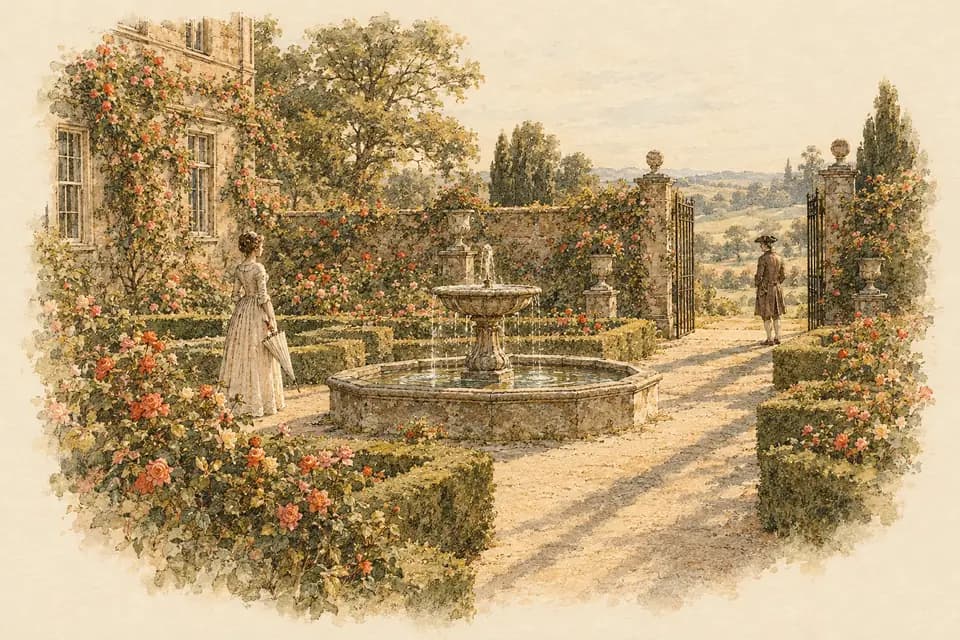
- Sample
A Scandal in Small Capitals
York, 1822. Hester Penrose keeps her late husband's print shop afloat by secretly writing the town's most vicious gossip sheet. When Viscount Thorne arrives to unmask the writer who called him a fortune hunter, he hires Hester to print the handbills for his sister's charity ball and keeps lingering at the press. He wants the author's name. She wants his money, and to stop liking him.
- Sample
Sent by Wire
Denver, 1882. Telegraph operator Clara Vance reads every message that passes through her key, which is how she learns the new silver mine owner is wiring lies to his investors back East. Before she decides what to do, he asks her to teach him Morse so he can stop trusting clerks with his secrets. Her job, his fortune and a town's payroll ride on one confession tapped out after midnight.
- Sample
A Garden for the Living
Kent, 1919. Nell Avery lost her husband at the Somme and her family's nursery to debt. Hired to restore the walled garden at Harrowdene, she finds its owner, Major Thomas Lisle, sleeping in the potting shed because the house is too quiet. He wants the garden finished for his sister's June wedding. Nell needs the fee. Neither of them wants the letter she digs up under the old pear tree.
- Sample
Beguiled by the Duke
In Victorian England, a Wallflower debutante crosses paths with a notorious, roguish Duke under unusual circumstances. As they engage in an audacious charade to aid each other, forbidden feelings begin to stir.
- Sample
Dances with the Enemy
Amidst the Civil War, a Southern belle's heart is torn between loyalty for her land and a forbidden love for a Union soldier who saved her life. Their secret romance must withstand the trials of war.
- Sample
Highland Tempest
A fiercely independent Scottish lass, amidst a clan feud, finds herself falling for a rival clan's laird, who not only offers her protection but challenges her beliefs and stirs her heart.
- Sample
Tangled in Taffeta
In the 1920s Jazz Age Paris, a talented flapper dancer finds herself inexplicably drawn to a mysterious, wealthy American patron, unraveling dark secrets and love in the City of Lights.
- Sample
The Baroness and the Mariner
A high-society woman in Regency England is trapped into a loveless marriage to secure her family’s debts, only to find her heart sway towards a dashing navy captain who challenges her perception of love and freedom.
Historical Romance: what makes the plot work
Historical Romance invites readers to fall in love with characters against the backdrop of historical events and settings.
Let the era's rules make the conflict
The best obstacles in historical romance come from law and custom, not from a mustache-twirling villain. In Devil in Winter by Lisa Kleypas, Evie proposes a marriage of convenience to the rake Sebastian because marriage is the only legal way out of her relatives' control. The wedding solves one problem in the opening chapters and creates the whole romance.
Use a bargain to force proximity
A fake courtship, a marriage of convenience or a wager gives two people a reason to keep meeting when society would keep them apart. In The Duke and I by Julia Quinn, Daphne and Simon pretend to court so she'll draw better suitors and he'll be left alone by matchmaking mothers. The pretense lets them be honest with each other in ways real courtship wouldn't.
Choose how much history to let in
Some historicals keep the period as costume and manners. Others put real events at the center. Beverly Jenkins's Indigo is set among the Underground Railroad in 1850s Michigan, and Hester's work hiding escaped slaves is both her danger and the reason she and Galen are drawn together. Decide early which kind you're writing.
Get the small things right
Readers notice when a letter crosses England overnight, a widow dances a month after the funeral, or a duke's younger son is called Lord Surname. Look up travel times, mourning customs, money and forms of address for your exact decade. These details build trust, and they also hand you plot: a delayed letter or a broken mourning rule can drive a whole act.
 ContemporaryGenerate a contemporary romance set right now: two people with jobs, exes, group chats and one good reason not to fall for each other.
 LGBTQ+Get a queer romance premise with real stakes and a happy ending in full: gay, lesbian, bi, trans and nonbinary leads falling in love in kitchens, locker rooms…
 Paranormal RomanceGenerate a paranormal romance where the supernatural is the obstacle: a vampire's hunger, a pack's law, a witch's curse, a demon's contract.
Questions about Historical Romance plots
How historically accurate does a historical romance need to be?
Readers accept a heroine with some modern spirit, but they object to modern slang, wrong titles and impossible freedoms. A duke's daughter is Lady Firstname, while a baron's wife is Lady Surname, and getting this wrong earns reviews. Aim for accurate texture and plausible behavior, even if the romance itself is idealized.
Which historical eras sell best?
Regency England dominates, and many readers treat the label loosely to cover roughly 1800 to 1837. Victorian, Georgian, Scottish Highland and American West romances each have loyal readerships, and the Gilded Age has grown in recent years. Less common eras can stand out, but the blurb has to sell the setting quickly.
How long is a historical romance novel?
Single-title historicals usually run 85,000 to 100,000 words, longer than most contemporaries because the world takes room to establish. Harlequin's Historical line targets a shorter length, around 70,000 to 75,000 words. Check the current guidelines of any line or publisher before you submit.
Found the plot? Write it.
Take it into Chapterly: outline it on a board, name the cast, and write chapter one tonight.
Plans from $9.99 a month. Cancel any time. Your words are always yours.