British Name Generator
British names draw on several distinct traditions rather than one shared naming style.
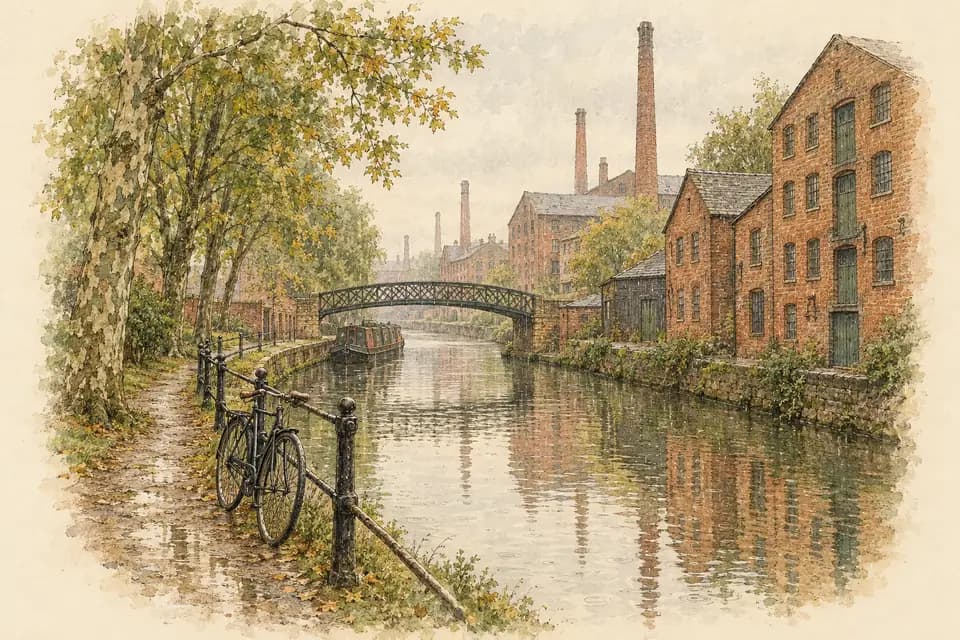
A few to start with
- EleanorShining Light
- HenryRuler of the Household
- CharlotteFree Woman
- WilliamResolute Protector
- VictoriaVictory
- ArthurNoble, Courageous
Understanding British names
British culture is known for its royal traditions, literature, and historic landmarks. British names often have a classic and timeless quality, reflecting the country's rich history.
English names may reflect Old English roots, Norman influence, or centuries of royal and literary use; Welsh names often preserve distinctive spellings and sounds, while Scottish names include Gaelic forms and regional favorites. Names such as Rhys, Hamish, and Margaret can suggest different parts of Britain without making a character’s background automatic. For writers, a name can hint at family history, generation, region, or social setting. Pair a familiar first name with a less expected surname—or the reverse—to give a character a specific, believable feel.
How to come up with the perfect British name
Traditional British names may include given names, middle names, and family names. They often have historical and aristocratic associations.
How British names are built
British first names come from many languages and eras: Old English, Latin, Greek, Hebrew, Norman French, Welsh, and Scottish Gaelic all leave their mark. Some names have familiar English forms alongside regional ones, such as Ian as a Scottish form of John or Alistair as a Scottish form of Alexander. Surnames often began as jobs, places, or family relationships, so a name can carry a small clue to a character’s ancestry.
Roots, spellings, and regional signals
Welsh names such as Rhys and Carys have spellings that may look unfamiliar to readers outside Wales, while Scottish names such as Ewan, Morag, and Hamish reflect Gaelic naming traditions. Many names travel freely across the UK, and a name alone cannot establish someone’s identity or home region. Treat regional associations as a starting point, then check the character’s family background and the story’s period.
Choosing a name for a story
Start with the character’s generation, family, and setting. A traditional name may suit a historical family, while a familiar name can make a contemporary character feel grounded. Consider how the full name sounds aloud and whether its spelling fits the character’s background. You can use a surname to add a trade, place, or family-history note, but avoid making a name do all the work of characterization.
Popular British names
Discover British names that capture the elegance and heritage of the United Kingdom:
| Name | Meaning | Gender |
|---|---|---|
| Eleanor | Shining Light | Female |
| Henry | Ruler of the Household | Male |
| Charlotte | Free Woman | Female |
| William | Resolute Protector | Male |
| Victoria | Victory | Female |
| Arthur | Noble, Courageous | Male |
| Elizabeth | God is My Oath | Female |
| Edward | Wealthy Guardian | Male |
| Alice | Noble, Truthful | Female |
| James | Supplanter | Male |
| Catherine | Pure | Female |
| George | Farmer | Male |
| Isabel | God's Promise | Female |
| Richard | Brave Ruler | Male |
| Olivia | Olive Tree | Female |
| Thomas | Twin | Male |
| Emma | Whole, Universal | Female |
| Philip | Lover of Horses | Male |
| Grace | Elegance, Beauty | Female |
| Frederick | Peaceful Ruler | Male |
60 more British names and meanings
Male British names
| Name | Meaning |
|---|---|
| Oliver | Long-established name; its precise origin is debated. |
| Alexander | Defender of men. |
| David | Beloved. |
| Jack | Form of John: God is gracious. |
| Benjamin | Son of the right hand. |
| Samuel | Heard by God. |
| Joseph | He will add. |
| Daniel | God is my judge. |
| Matthew | Gift of God. |
| Albert | Noble and bright. |
| Alfred | Elf counsel. |
| Edmund | Old English name associated with prosperity and protection. |
| Hugh | Associated with mind, spirit, or heart. |
| Ian | Scottish form of John: God is gracious. |
| Ewan | Scottish name with Gaelic roots; its origin is debated. |
| Rhys | Welsh name meaning ardor or enthusiasm. |
| Dylan | Welsh name linked with the sea in medieval legend. |
| Owen | Welsh name with a debated origin. |
| Hamish | Scottish Gaelic form of James. |
| Angus | Traditional Scottish name from Gaelic Aonghas. |
| Callum | Scottish Gaelic form of Columba: dove. |
| Finlay | Scottish Gaelic name often interpreted as fair warrior. |
| Alistair | Scottish form of Alexander: defender of men. |
| Malcolm | Scottish Gaelic name meaning devotee of Saint Columba. |
| Fergus | Man of vigor. |
| Rupert | Bright fame. |
| Evan | Welsh form of John: God is gracious. |
| Tobias | God is good. |
Female British names
| Name | Meaning |
|---|---|
| Amelia | Associated with work or industriousness. |
| Margaret | Pearl. |
| Sophie | Wisdom. |
| Emily | English form of a name from the Roman Aemilia family. |
| Lily | Lily flower. |
| Lucy | Light. |
| Abigail | My father is joy. |
| Beatrice | Often interpreted as she who brings happiness. |
| Florence | Flourishing. |
| Harriet | Home ruler. |
| Jane | God is gracious. |
| Julia | Roman family name traditionally associated with youth. |
| Rose | Rose flower. |
| Matilda | Strength in battle. |
| Martha | Lady or mistress. |
| Sarah | Princess. |
| Anne | Grace. |
| Edith | Old English name associated with prosperity and war. |
| Mabel | Lovable. |
| Poppy | Named for the flower. |
| Imogen | Literary name popularized by Shakespeare; origin uncertain. |
| Carys | Welsh name associated with love. |
| Eira | Snow in Welsh. |
| Megan | Welsh diminutive of Margaret. |
| Fiona | Scottish-associated name from Gaelic fionn, fair. |
| Isla | Name of a Scottish island. |
| Morag | Traditional Scottish Gaelic feminine name. |
| Rhiannon | Name of a powerful figure in medieval Welsh legend. |
Unisex British names
| Name | Meaning |
|---|---|
| Alex | Short form of Alexander or Alexandra. |
| Robin | Name used for all genders; also a bird name. |
| Morgan | Welsh name used for all genders. |
| Rowan | Tree name used for all genders. |
British last names
| Name | Meaning |
|---|---|
| Smith | Occupational surname for a metalworker. |
| Taylor | Occupational surname for a tailor. |
| Clark | Surname from clerk, once a cleric or learned writer. |
| Baker | Occupational surname for a baker. |
| Carter | Occupational surname for someone who transported goods by cart. |
| Cooper | Occupational surname for a maker of barrels and casks. |
| Fletcher | Occupational surname for an arrow maker. |
| Wright | Occupational surname for a maker or craftsman. |
| Turner | Occupational surname for a worker who shaped wood on a lathe. |
| Shepherd | Occupational surname for someone who tended sheep. |
| Wood | Topographic surname for someone living near woodland. |
| Hill | Topographic surname for someone living by a hill. |
| Ford | Topographic surname referring to a river crossing. |
| Brook | Topographic surname referring to a small stream. |
| Sutton | Place-name surname meaning south settlement or farm. |
| Jones | Welsh and English surname meaning son of John. |
| Evans | Welsh surname meaning son of Evan. |
| Price | Welsh surname derived from ap Rhys, meaning son of Rhys. |
| MacDonald | Scottish Gaelic surname meaning son of Donald. |
| Campbell | Scottish surname traditionally explained as Gaelic for crooked mouth. |
British names: frequently asked questions
What are common British names?
Popular choices vary by nation and generation, but familiar names heard across Britain include Jack, Oliver, Sophie, and Lily. Traditional names such as Margaret and David remain recognizable, while Welsh and Scottish choices like Rhys and Isla can give a character a more specific regional association. These examples are not a fixed ranking.
Are British names the same as English names?
No. British refers to the UK, which includes England, Scotland, Wales, and Northern Ireland; English names are only one part of that wider mix. Rhys and Carys are Welsh, while Hamish and Morag are associated with Scottish Gaelic tradition. Many names, such as Jane or David, are used throughout Britain.
What does the name Rhys mean?
Rhys is a Welsh masculine name commonly understood to mean “ardor” or “enthusiasm.” It has a long history in Wales, including among medieval rulers and nobles. The spelling is distinctively Welsh, though the name is now used more widely. It can suit a character with Welsh family roots or a contemporary setting.
How can I choose a British name for a character?
Match the name to the character’s family, generation, and location rather than relying on a broad national label. A Welsh character might plausibly be called Carys or Rhys; Hamish or Morag may suggest Scottish Gaelic heritage. Check that the name fits your story’s period, and pair it with a surname that sounds natural for the same character.
Other world culture name generators
 Korean namesMinji, Joon, Jiwoo
 Japanese namesHana, Haruki, Sora
 Welsh namesCeridwen, Llyr, Maelona
 French namesAmélie, Lucien, Fleur
 Arabic namesLayla, Amir, Zahra
 Hindi namesAarav, Aanya, Vivaan
 German namesLena, Maximilian, Emilia
 Italian namesAlessia, Matteo, Bianca
 Chinese namesMei, Wei, Jingyi
 Spanish namesSofía, Mateo, Valentina
 Irish namesCaoimhe, Fionn, Roisin
 African namesAmina, Kwame, Nia
 Greek namesAthena, Apollo, Penelope
 Native American namesAmik, Nayeli, Kȟolá
 Russian namesAnastasia, Mikhail, Natalia
 Turkish namesAylin, Emir, Dilara
 Hawaiian namesLeilani, Kai, Halia
 Egyptian namesAhmed, Layla, Ramesses
Chapter one starts tonight.
Open a blank page, write the first line, and see where it takes you. Your readers are out there.
Plans from $9.99 a month. Cancel any time. Your words are always yours.