Italian Name Generator
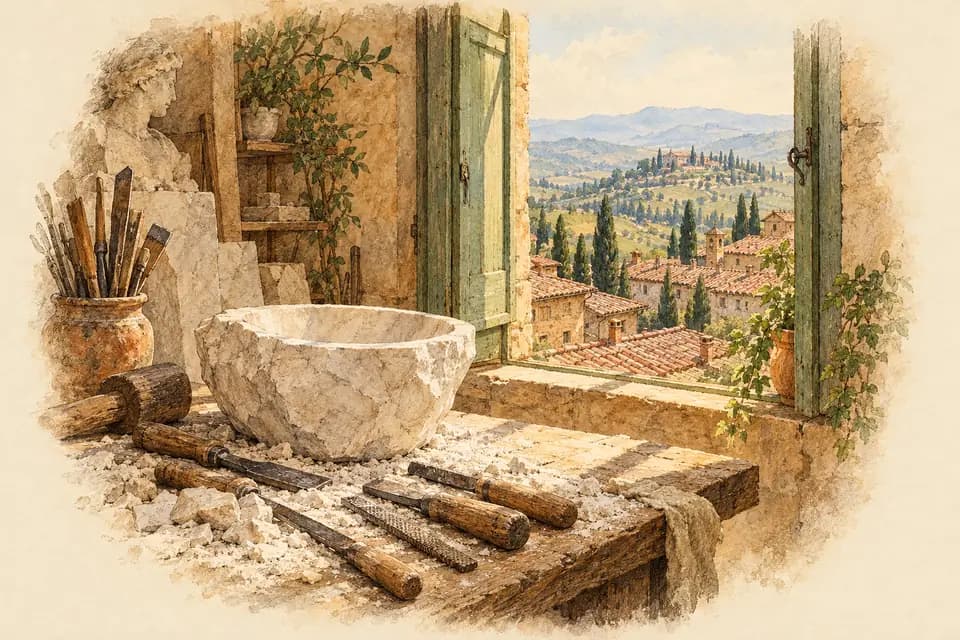
Italian names often end in open vowel sounds, while doubled consonants give names such as Tommaso and Gemma a distinctive rhythm.
A few to start with
- AlessiaDefender of Mankind
- MatteoGift of God
- BiancaWhite
- LeonardoBrave Lion
- ChiaraBright, Clear
- GiovanniGod is Gracious
Understanding Italian names
Italian culture is known for its art, cuisine, and romance. Italian names often have a musical quality and reflect the country's rich heritage.
Their roots range from ancient Roman family names and Latin words to Greek, Hebrew, and Germanic names carried through Christian and regional traditions. Some forms, including Nicolò and Caterina, also have spellings and pronunciations shaped by Italian usage. For fiction, a name can suggest a character’s generation, family background, or connection to a particular place without defining their personality. Pair a familiar given name with a surname or nickname that suits the character’s history and setting.
How to come up with the perfect Italian name
Traditional Italian names typically include given names and family names. They may have historical or religious significance.
Notice endings and sounds
Many Italian given names end in -o for masculine forms and -a for feminine forms, though this is a pattern rather than a rule. Names such as Andrea are masculine in Italy despite being used differently elsewhere. Stress marks can matter: Nicolò is stressed on its final syllable. Doubled consonants, as in Gemma or Tommaso, are pronounced longer, so they can give dialogue a distinctly Italian sound.
Look to history and roots
Italian names reflect several layers of history. Marco, Claudia, and Cesare connect with ancient Roman naming traditions; Pietro and Lucia are forms established through Christian use. Other names came through Greek, Hebrew, or Germanic languages and changed in spelling or pronunciation over time. A name’s meaning may be uncertain even when its history is well documented, so avoid assigning a precise translation when the origin is debated.
Choose for character and setting
Consider when and where your character lives: naming fashions vary by generation and region, and a name common today may feel unusual in a historical setting. Check how the given name sounds beside the surname, and decide whether family members use a diminutive or nickname. For realism, use Italian spellings and accents where appropriate, and avoid treating a name alone as shorthand for a character’s personality or background.
Popular Italian names
Discover Italian names that capture the essence of Italy's cultural heritage:
| Name | Meaning | Gender |
|---|---|---|
| Alessia | Defender of Mankind | Female |
| Matteo | Gift of God | Male |
| Bianca | White | Female |
| Leonardo | Brave Lion | Male |
| Chiara | Bright, Clear | Female |
| Giovanni | God is Gracious | Male |
| Fiorella | Little Flower | Female |
| Riccardo | Powerful Leader | Male |
| Isabella | Devoted to God | Female |
| Lorenzo | Laurel-Crowned | Male |
| Aurora | Dawn | Female |
| Vittorio | Conqueror | Male |
| Francesca | Free | Female |
| Dante | Enduring | Male |
| Eleonora | Shining Light | Female |
| Gabriele | God is My Strength | Male |
| Ginevra | Fair One | Female |
| Raffaele | God has Healed | Male |
| Serena | Calm, Serene | Female |
| Valentino | Strong, Healthy | Male |
60 more Italian names and meanings
Male Italian names
| Name | Meaning |
|---|---|
| Andrea | Italian masculine form of Andrew, from Greek for “manly.” |
| Marco | Italian form of Marcus, traditionally associated with Mars. |
| Luca | Italian form of Luke; traditionally linked to Lucania. |
| Paolo | Italian form of Paul, from Latin for “small” or “humble.” |
| Enzo | Used independently or as a short form of names such as Vincenzo. |
| Arturo | Italian form of Arthur; the name’s original meaning is debated. |
| Federico | From Germanic elements meaning “peace” and “ruler.” |
| Edoardo | Italian form of Edward, traditionally interpreted as “wealthy guardian.” |
| Tommaso | Italian form of Thomas, meaning “twin.” |
| Filippo | Italian form of Philip, meaning “friend of horses.” |
| Stefano | Italian form of Stephen, meaning “crown” or “wreath.” |
| Pietro | Italian form of Peter, meaning “rock” or “stone.” |
| Michele | Italian masculine form of Michael: “Who is like God?” |
| Antonio | Italian form of Antonius; its original meaning is uncertain. |
| Jacopo | Italian form of Jacob, traditionally interpreted as “supplanter.” |
| Salvatore | Italian word-name meaning “savior.” |
| Nicolò | Italian form of Nicholas, meaning “victory of the people.” |
| Elia | Italian form of Elijah, meaning “My God is Yahweh.” |
| Samuele | Italian form of Samuel, traditionally interpreted as “God has heard.” |
| Cesare | Ancient Roman family name borne by Julius Caesar. |
| Davide | Italian form of David, meaning “beloved.” |
| Bruno | From a Germanic word meaning “brown.” |
| Alberto | Italian form of Albert, from elements meaning “noble” and “bright.” |
| Massimo | Italian form of Maximus, meaning “greatest.” |
| Fabrizio | Italian form of Fabricius, connected to Latin faber, “craftsman.” |
| Leandro | Italian form of Leander, from Greek elements meaning “lion” and “man.” |
| Emanuele | Italian form of Emmanuel, meaning “God is with us.” |
| Corrado | Italian form of Conrad, traditionally interpreted as “brave counsel.” |
| Dario | Italian form of Darius, an ancient Persian royal name. |
| Renato | Italian form of Renatus, meaning “reborn.” |
Female Italian names
| Name | Meaning |
|---|---|
| Giulia | Italian feminine form of Julius; the name’s ancient root is uncertain. |
| Sofia | Italian form of Sophia, meaning “wisdom.” |
| Beatrice | From Latin Beatrix, traditionally associated with bringing happiness. |
| Lucia | Italian feminine form of Lucius, from Latin lux, “light.” |
| Marta | Italian form of Martha, from Aramaic for “lady” or “mistress.” |
| Caterina | Italian form of Katherine; traditionally interpreted as “pure.” |
| Valeria | Feminine form of Valerius, from Latin valere, “to be strong.” |
| Margherita | Italian form of Margaret, ultimately from Greek for “pearl.” |
| Camilla | Ancient Roman name; its original meaning is uncertain. |
| Silvia | Italian feminine form of Silvius, associated with Latin silva, “forest.” |
| Elisa | Short form of Elisabetta, ultimately meaning “my God is an oath.” |
| Noemi | Italian form of Naomi, traditionally interpreted as “pleasantness.” |
| Miriam | Biblical name with a debated and uncertain etymology. |
| Ilaria | Italian feminine form of Hilarius, from Latin for “cheerful.” |
| Claudia | Feminine form of Claudius, an ancient Roman family name. |
| Livia | Ancient Roman family name; its original meaning is uncertain. |
| Teresa | Long-established Italian name with an uncertain origin and meaning. |
| Anita | Diminutive of Anna, traditionally associated with “grace.” |
| Anna | Italian form of Hannah, traditionally interpreted as “grace” or “favor.” |
| Fabiola | Feminine form of an ancient Roman family name. |
| Lavinia | Ancient Roman name associated with Lavinia in Virgil’s Aeneid. |
| Costanza | Italian form of Constantia, meaning “steadfastness” or “constancy.” |
| Agata | Italian form of Agatha, from Greek for “good.” |
| Adele | Italian form of Adela, from a Germanic element meaning “noble.” |
| Rachele | Italian form of Rachel, meaning “ewe” in Hebrew. |
| Eva | Italian form of Eve, traditionally linked to Hebrew for “life.” |
| Irene | Italian form of Eirene, the Greek word for “peace.” |
| Letizia | Italian form of Laetitia, meaning “joy” or “gladness.” |
| Gemma | Italian word-name meaning “gem” or “precious stone.” |
| Viviana | Italian feminine form of Vivian, from Latin vivus, “alive.” |
Italian last names
| Name | Meaning |
|---|---|
| Rossi | Often began as a nickname for someone with red hair or a ruddy complexion. |
| Russo | Often derived from a nickname for someone red-haired or ruddy. |
| Ferrari | Occupational surname connected with a blacksmith or ironworker. |
| Esposito | Historically associated in some regions with children left in foundling institutions. |
| Romano | Originally indicated a person from Rome or a Roman. |
| Bianchi | Often began as a nickname for someone fair-haired or pale. |
| Moretti | Often derived from a nickname related to Moro, “dark” or “Moorish.” |
| Conti | Plural of conte, “count”; could denote a count’s household or an official. |
| Greco | Originally identified someone as Greek or of Greek origin. |
| Costa | Topographic surname for someone living by a coast or hillside. |
| Marino | From a personal name meaning “of the sea,” or a coastal association. |
| Gallo | Means “rooster”; it may have begun as a nickname. |
| Lombardi | Originally associated with Lombardy or the Lombard people. |
| Fontana | Topographic surname meaning “fountain” or “spring.” |
| De Luca | Patronymic meaning “of Luca” or “descendant of Luca.” |
| Ricci | Often began as a nickname for someone with curly hair. |
| Mancini | Often derived from a nickname for a left-handed person. |
| Rinaldi | Patronymic surname formed from the given name Rinaldo. |
| Santoro | Connected with Ognissanti, the Italian name for All Saints’ Day. |
| Colombo | Means “dove” and may have begun as a personal name or nickname. |
Italian names: frequently asked questions
What are common Italian names?
Familiar Italian given names include Luca, Marco, Andrea, Giulia, Sofia, and Lucia. Their popularity changes by generation and region, so a contemporary child’s name may differ from one common among grandparents. Andrea is typically masculine in Italy, a useful detail for writers whose readers may know the name from other languages.
What do Italian names mean?
Meanings depend on a name’s linguistic roots, and some origins remain uncertain. Sofia means “wisdom,” Pietro means “rock,” and Gemma means “gem.” Lucia is connected to Latin lux, “light.” For names such as Teresa or Livia, it is more accurate to note the uncertain etymology than to give them a made-up translation.
How do Italian surnames work?
Italian surnames are generally inherited family names, not labels that change to match a person’s gender. Many began as nicknames, occupations, or references to places: Rossi often referred to red coloring, Ferrari to blacksmithing, and Romano to Rome. Regional history matters, and the same surname can have more than one origin.
How can I choose an Italian name for a character?
Match the name to the character’s era, family, and location, then check its Italian spelling and pronunciation. A modern character named Nicolò uses an accent to mark final-syllable stress; a historical character might suit a name rooted in Roman or Christian tradition. Try the full name aloud, and use a nickname only if it fits the character’s relationships.
Other world culture name generators
 Korean namesMinji, Joon, Jiwoo
 Japanese namesHana, Haruki, Sora
 Welsh namesCeridwen, Llyr, Maelona
 French namesAmélie, Lucien, Fleur
 Arabic namesLayla, Amir, Zahra
 Hindi namesAarav, Aanya, Vivaan
 German namesLena, Maximilian, Emilia
 Chinese namesMei, Wei, Jingyi
 Spanish namesSofía, Mateo, Valentina
 Irish namesCaoimhe, Fionn, Roisin
 African namesAmina, Kwame, Nia
 British namesEleanor, Henry, Charlotte
 Greek namesAthena, Apollo, Penelope
 Native American namesAmik, Nayeli, Kȟolá
 Russian namesAnastasia, Mikhail, Natalia
 Turkish namesAylin, Emir, Dilara
 Hawaiian namesLeilani, Kai, Halia
 Egyptian namesAhmed, Layla, Ramesses
Chapter one starts tonight.
Open a blank page, write the first line, and see where it takes you. Your readers are out there.
Plans from $9.99 a month. Cancel any time. Your words are always yours.