German Name Generator
German names bring together several layers of history: older Germanic names built from elements for peace, strength, protection, or fame; biblical and classical names adopted through Christianity; and short forms that became names in their own right.
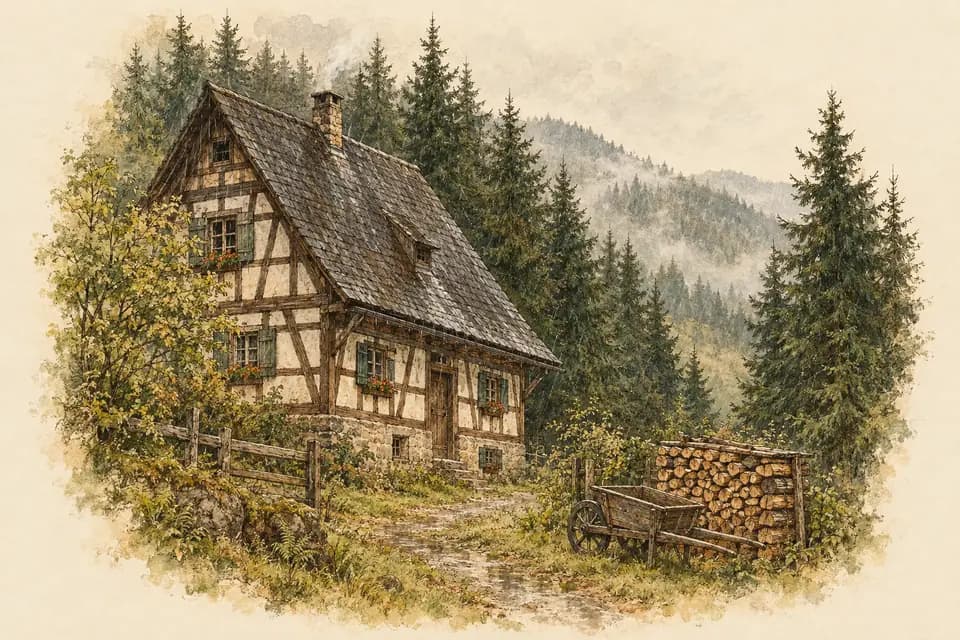
A few to start with
- LenaBright, Shining
- MaximilianGreatest
- EmiliaRival
- FelixLucky, Fortunate
- SophiaWisdom
- LukasLight
Understanding German names
German culture is known for its history, craftsmanship, and language. German names often have strong, traditional qualities and meaningful origins.
Their sounds range from compact choices such as Rolf to longer, formal names such as Wilhelmine. Spellings like ä, ö, ü, and ß can also give a name a distinctly German appearance, though many familiar names use none of them. For a story, a name can suggest a character’s generation, family traditions, or regional background without defining their personality.
How to come up with the perfect German name
Traditional German names often consist of given names and family names. They may reflect historical figures, occupations, or natural elements.
How German names are built
Many traditional Germanic names combine two elements. Friedrich joins elements associated with peace and rule; Hildegard pairs battle with an enclosure or protection. Other names entered German through Latin, Greek, or Hebrew, often through Christian tradition. Modern German names also include international choices. This mix means a German character’s name need not sound overtly ancient to feel plausible: Johann, Charlotte, and Mika belong to different naming histories, yet all are familiar in German-speaking settings.
Roots, short forms, and regional flavor
Some names are long-established German forms of names used across Europe: Johann is related to John, while Jürgen is a German form of George. Familiar short forms can stand alone, as with Greta or Toni. Regional and generational preferences matter, too; older names such as Hedwig or Günther may suggest a different era from newer-feeling choices such as Mika. Treat these as cues rather than rules, since families often keep names across generations.
Choosing a name for a character
Start with the character’s age, family, and setting. A contemporary character in Berlin might plausibly have a short international name, while a historical family might favor a formal name passed down through generations. Check whether the name’s spelling and pronunciation fit the period, and decide whether the character uses a nickname. Pair a given name with a surname that suits the family’s history; common occupational surnames such as Müller or Fischer are not exclusive to any one region or social class.
Popular German names
Discover German names that reflect the heart of Germany's cultural heritage:
| Name | Meaning | Gender |
|---|---|---|
| Lena | Bright, Shining | Female |
| Maximilian | Greatest | Male |
| Emilia | Rival | Female |
| Felix | Lucky, Fortunate | Male |
| Sophia | Wisdom | Female |
| Lukas | Light | Male |
| Mia | Mine | Female |
| Leon | Lion | Male |
| Hannah | Grace | Female |
| Elias | Jehovah is God | Male |
| Paula | Small | Female |
| Finn | Fair, White | Male |
| Emma | Universal | Female |
| Oscar | God's Spear | Male |
| Marie | Bitter | Female |
| Anton | Priceless | Male |
| Clara | Clear, Bright | Female |
| Simon | Listener | Male |
| Amelia | Work of the Lord | Female |
| Jonas | Dove | Male |
60 more German names and meanings
Male German names
| Name | Meaning |
|---|---|
| Johann | God is gracious. |
| Heinrich | Home ruler. |
| Friedrich | Peaceful ruler. |
| Karl | Traditionally interpreted as “free man.” |
| Wilhelm | Resolute protector. |
| Otto | Wealth or fortune. |
| Ludwig | Famous in battle. |
| Konrad | Bold counsel. |
| Matthias | Gift of God. |
| Tobias | God is good. |
| Andreas | Manly; from the Greek name Andreas. |
| Stefan | Crown or garland. |
| Peter | Rock or stone. |
| Paul | Small or humble. |
| Markus | German form of Marcus, traditionally linked with Mars. |
| Florian | Flourishing or flowering. |
| Georg | Farmer or earth-worker. |
| Bernd | Short form of Bernhard; traditionally “bear-brave.” |
| Rainer | Army counsel. |
| Jürgen | German form of George; traditionally “farmer.” |
| Günther | Battle and warrior. |
| Werner | Traditionally associated with a defending warrior. |
| Manfred | Man of peace. |
| Claus | German short form of Nikolaus; victory of the people. |
| Dieter | Short form related to Dietrich; ruler of the people. |
| Armin | Old Germanic name of uncertain origin. |
| Norbert | North and bright. |
| Rolf | Famous wolf. |
Female German names
| Name | Meaning |
|---|---|
| Greta | Short form of Margareta; pearl. |
| Hedwig | Battle and combat. |
| Gertrud | Spear and strength. |
| Irmgard | Great or whole, with enclosure or protection. |
| Brunhilde | Armor and battle. |
| Hildegard | Battle and protection. |
| Adelheid | Noble kind or noble nature. |
| Mathilde | Might in battle. |
| Frieda | Peace. |
| Charlotte | Feminine form related to Karl; traditionally “free woman.” |
| Luise | Feminine form related to Ludwig; famous in battle. |
| Johanna | God is gracious. |
| Katharina | Traditionally interpreted as “pure.” |
| Elisabeth | God is my oath. |
| Margarete | Pearl. |
| Ursula | Little bear. |
| Roswitha | Fame and strength. |
| Helene | Greek name often associated with light. |
| Christa | Feminine form related to Christian. |
| Dorothea | Gift of God. |
| Gisela | Traditionally associated with a pledge. |
| Anneliese | Combination of Anna and Liese. |
| Marlene | German blend of Maria and Magdalene. |
| Heike | Frisian short form of Adelheid; noble kind. |
| Ingrid | Scandinavian-rooted name long familiar in German. |
| Sigrid | Victory and beautiful. |
| Cornelia | Ancient Roman family name of uncertain origin. |
| Wilhelmine | Feminine form of Wilhelm; resolute protection. |
Unisex German names
| Name | Meaning |
|---|---|
| Kim | Used for more than one gender in German-speaking contexts. |
| Sascha | Form of Alexander; defender of the people. |
| Toni | Short form of Anton or Antonia. |
| Alex | Short form of Alexander or Alexandra; defender of the people. |
German last names
| Name | Meaning |
|---|---|
| Müller | Miller; an occupational surname. |
| Schmidt | Smith or metalworker. |
| Schneider | Tailor. |
| Fischer | Fisherman. |
| Weber | Weaver. |
| Meyer | Often associated with a steward or tenant farmer. |
| Wagner | Wagon maker or wagon driver. |
| Becker | Baker. |
| Schulz | Historically associated with a village official. |
| Hoffmann | A person associated with a farm or estate. |
| Schäfer | Shepherd. |
| Koch | Cook. |
| Bauer | Farmer or peasant. |
| Richter | Judge. |
| Klein | Small; sometimes a descriptive nickname. |
| Braun | Brown; sometimes a descriptive nickname. |
| Schwarz | Black; sometimes a descriptive nickname. |
| Vogel | Bird; possibly a nickname. |
| Fuchs | Fox; possibly a nickname. |
| Neumann | New man or newcomer. |
German names: frequently asked questions
What are common German names?
Familiar German names include both traditional forms and names shared across Europe. Johann, Friedrich, and Heinrich have long histories in German-speaking regions, while Katharina, Charlotte, and Elisabeth are established choices for girls. Current preferences change by generation, so a contemporary character may have a name such as Mika or Alex rather than an older family name.
What do German names usually mean?
Meanings depend on a name’s origin. Many older Germanic names combine elements: Friedrich is traditionally understood as “peaceful ruler,” and Mathilde as “might in battle.” Other names came through Hebrew, Greek, or Latin; Johann means “God is gracious,” while Peter means “rock.” Some names, including Armin, have uncertain or debated origins.
How do German naming customs work?
German-speaking families commonly use a given name followed by a family surname, and some people have more than one given name. A formal name may have an everyday short form: Katharina can be called Käthe, and Johann may be called Hans. Naming fashions vary by generation and family, so a character’s name can reflect family tradition as much as current trends.
How do you pronounce German names with umlauts?
The letters ä, ö, and ü represent distinct vowel sounds, not decorative marks. For an approximate guide, Müller has a rounded ü sound, while Schäfer begins with the sh sound represented by sch. Pronunciation varies somewhat by speaker and region. If a story includes spoken dialogue, a pronunciation reference can help keep a name consistent.
Other world culture name generators
 Korean namesMinji, Joon, Jiwoo
 Japanese namesHana, Haruki, Sora
 Welsh namesCeridwen, Llyr, Maelona
 French namesAmélie, Lucien, Fleur
 Arabic namesLayla, Amir, Zahra
 Hindi namesAarav, Aanya, Vivaan
 Italian namesAlessia, Matteo, Bianca
 Chinese namesMei, Wei, Jingyi
 Spanish namesSofía, Mateo, Valentina
 Irish namesCaoimhe, Fionn, Roisin
 African namesAmina, Kwame, Nia
 British namesEleanor, Henry, Charlotte
 Greek namesAthena, Apollo, Penelope
 Native American namesAmik, Nayeli, Kȟolá
 Russian namesAnastasia, Mikhail, Natalia
 Turkish namesAylin, Emir, Dilara
 Hawaiian namesLeilani, Kai, Halia
 Egyptian namesAhmed, Layla, Ramesses
Chapter one starts tonight.
Open a blank page, write the first line, and see where it takes you. Your readers are out there.
Plans from $9.99 a month. Cancel any time. Your words are always yours.