Russian Name Generator
Get a Russian first name with its meaning, then build the full name: first name, patronymic, surname. Ivan Petrovich Sokolov's sister is Anna Petrovna Sokolova.
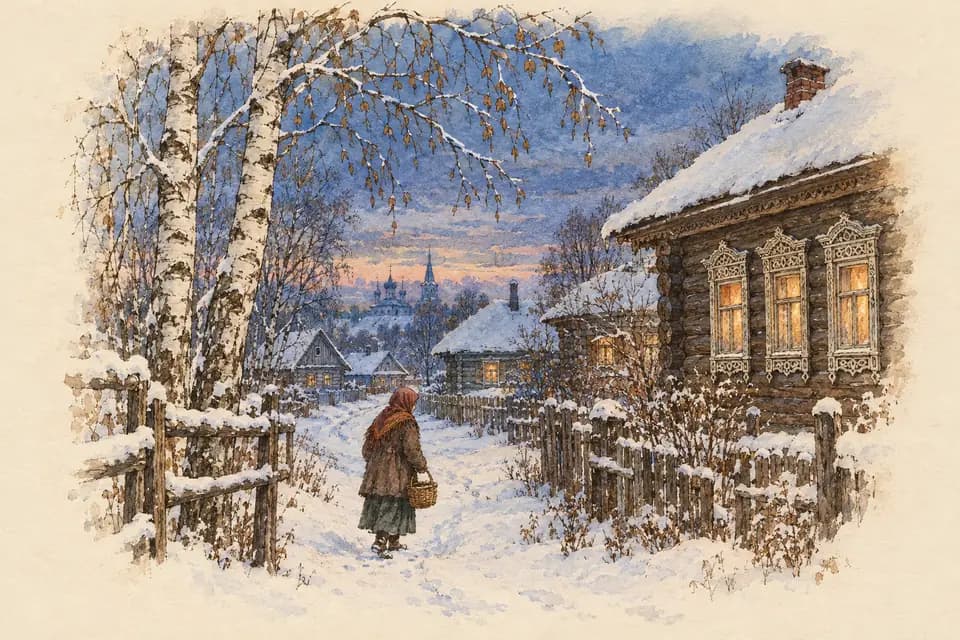
A few to start with
- AnastasiaResurrection
- MikhailWho is Like God?
- NataliaChristmas Day
- AlexeiDefender, helper
- YekaterinaPure
- DmitriOf Demeter, the Greek goddess of the harvest
Understanding Russian names
Every Russian has three names: a first name, a patronymic built from the father's first name, and a surname. Dmitri Ivanovich is "Dmitri, son of Ivan"; his sister is Maria Ivanovna. Surnames change for women too: Ivanov becomes Ivanova, Tolstoy becomes Tolstaya. First name plus patronymic is the polite form, so a teacher or boss is Anna Sergeyevna, never just Anna.
Most first names arrived with Orthodox Christianity from Greek, Hebrew and Latin: Aleksandr, Mikhail, Yelena, Natalia. A smaller set is native Slavic, built from roots like slav (glory) and mil (dear): Yaroslav, Lyudmila, Vladislav. Then come the diminutives. Aleksandr is Sasha, Mikhail is Misha, Yekaterina is Katya, and Maria is Masha, or Mashenka when someone is being tender. A novel can track a whole relationship through which form of a name people use.
How to come up with a Russian name
Build the patronymic
Take the father's first name and add -ovich or -evich for a son, -ovna or -evna for a daughter. Pyotr gives Petrovich and Petrovna; Sergei gives Sergeyevich and Sergeyevna; Ilya gives Ilyich and Ilyinichna, as in Vladimir Ilyich Lenin. In speech the patronymic often shrinks, so Ivanovich comes out as Ivanych among friends. An older man may even be called by his patronymic alone, which sounds both familiar and respectful.
Pick a surname with a story
The commonest surnames came from a father's name or nickname: Ivanov, Petrov, Smirnov (from smirny, quiet). Others come from trades, like Kuznetsov (smith) and Popov (priest), or animals, like Volkov (wolf), Medvedev (bear) and Sokolov (falcon). Surnames ending in -sky, like Dostoevsky, often come from a place name and become -skaya for women. Ukrainian surnames often end in -enko or -uk, a quick marker of a character's roots.
Use diminutives in dialogue
Diminutives carry tone. Everyday short forms: Dmitri is Dima, Aleksei is Alyosha, Natalia is Natasha, Yevgeniya is Zhenya. Affectionate forms add -enka or -ochka: Natashenka, Dimochka. Rough or dismissive ones add -ka: Sashka, Natashka, Vanka. Russian novels confuse English readers because one man can be Rodion Romanovich, Rodya and Raskolnikov within a page. Use one form per relationship, and give readers a cue the first time it changes.
Match the name to the era
Names follow history. Revolutionary parents in the 1920s invented names like Vladlen (from Vladimir Lenin) and Ninel (Lenin spelled backward). Soviet-era classics include Svetlana, Tatiana, Sergei and Andrei. After 1991, older church names came back, and Sofia, Maria, Artyom and Mikhail have led recent lists. For a tsarist or medieval setting, use Vasily, Ivan, Fyodor, Yevdokia or Marfa. Gogol's comedy Marriage shows the old-fashioned merchant style: the bride is Agafya Tikhonovna.
Famous Russian names and what they show
Real people and one famous character, with the full three-part names Russians would use.
- Fyodor Mikhailovich DostoevskyHis patronymic records his father, Mikhail. Fyodor is the Russian form of Theodore, "gift of God," and a Russian reader would address him as Fyodor Mikhailovich.
- Lev Nikolayevich TolstoyLev means lion, which is why English editions called him Leo. His wife was Sofia Andreyevna Tolstaya, showing both a woman's patronymic and the feminine surname.
- Anna Andreyevna AkhmatovaBorn Anna Gorenko, she took Akhmatova as a pen name after her father objected to verse under the family name. She traced it to a Tatar ancestor on her mother's side.
- Yuri Alekseyevich GagarinYuri is a Russian form of George. The first man in space carries the standard three-part name, with his father Aleksei in the middle.
- Valentina Vladimirovna TereshkovaThe first woman in space shows both feminine forms at once: -ovna in her patronymic from her father Vladimir, and -ova on the surname he wore as Tereshkov.
- Ivan IV, Ivan GroznyEnglish calls him Ivan the Terrible, but grozny means formidable or awe-inspiring. Ivan, the Russian John, is the stock hero of folk tales, as in Ivan Tsarevich.
- Rodion Romanovich RaskolnikovThe hero of Dostoevsky's Crime and Punishment has a surname built on raskol, "schism" or "split," a hint at his divided mind and a model for meaningful surnames.
Popular Russian names
| Name | Meaning | Gender |
|---|---|---|
| Anastasia | Resurrection | Female |
| Mikhail | Who is Like God? | Male |
| Natalia | Christmas Day | Female |
| Alexei | Defender, helper | Male |
| Yekaterina | Pure | Female |
| Dmitri | Of Demeter, the Greek goddess of the harvest | Male |
| Sofia | Wisdom | Female |
| Ivan | God is Gracious | Male |
| Larisa | From Larissa, a city in ancient Greece | Female |
| Nikolai | Victory of the People | Male |
| Tatiana | From the Roman family name Tatius; its original meaning is unknown | Female |
| Andrei | Manly | Male |
| Vera | Faith | Female |
| Sergei | From the Roman family name Sergius; its original meaning is unknown | Male |
| Yulia | Youthful | Female |
| Konstantin | Steadfast | Male |
| Oksana | Hospitality; the Ukrainian form of Kseniya | Female |
| Pavel | Small | Male |
| Elizaveta | God is My Oath | Female |
| Fyodor | God's Gift | Male |
59 more Russian names and meanings
Male Russian names
| Name | Meaning |
|---|---|
| Aleksandr | Defender of people; Russian form of Alexander. |
| Anatoly | From Greek, associated with Anatolia or the east. |
| Anton | Traditional Russian form of Anthony; deeper origin is uncertain. |
| Arkady | From Arcadia, a region of ancient Greece. |
| Artyom | Russian form of Artemios; traditionally linked with Artemis. |
| Bogdan | God-given; a Slavic name. |
| Boris | Traditional Slavic name; its original meaning is uncertain. |
| Denis | Russian form of Dionysios, associated with Dionysus. |
| Evgeny | Russian form of Eugene; well-born. |
| Georgy | Russian form of George; earth-worker or farmer. |
| Grigory | Russian form of Gregory; watchful. |
| Ilya | Russian form of Elijah; “my God is Yahweh.” |
| Kirill | Russian form of Cyril; associated with lordship. |
| Leonid | Lion-like; from Greek Leonidas. |
| Lev | Lion; also associated with the name Leo. |
| Maksim | Russian form of Maximus; greatest. |
| Mark | Russian form of Marcus, traditionally linked with Mars. |
| Matvey | Russian form of Matthew; gift of God. |
| Oleg | From Old Norse Helgi; holy or blessed. |
| Roman | Roman; associated with a person from Rome. |
| Rostislav | Slavic name combining growth and glory. |
| Ruslan | Associated with the word for lion; its origin is debated. |
| Semyon | Russian form of Simon; heard or listened to. |
| Stanislav | Slavic name combining standing or becoming and glory. |
| Stepan | Russian form of Stephen; crown or wreath. |
| Vadim | Traditional Russian name of uncertain origin and meaning. |
| Valentin | Strong or healthy; from Latin valens. |
| Vasily | Russian form of Basil; royal or kingly. |
| Viktor | Russian form of Victor; conqueror. |
| Yaroslav | Slavic name combining yar, vigorous, and glory. |
Female Russian names
| Name | Meaning |
|---|---|
| Agata | Russian form of Agatha; good or virtuous. |
| Alina | Used in Russian; origin and meaning vary. |
| Alisa | Russian form of Alice; associated with noble lineage. |
| Alla | Traditional Russian name with uncertain origin and meaning. |
| Angelina | Related to Greek angelos, meaning messenger. |
| Daria | Russian form of Darius; traditionally interpreted as possessing good. |
| Diana | Roman name associated with the goddess Diana. |
| Galina | From Greek Galene; calm or tranquility. |
| Inna | Traditional Russian name of uncertain origin. |
| Irina | Russian form of Irene; peace. |
| Karina | Used in Russian; origin and meaning vary. |
| Kira | Used in Russian; origins and proposed meanings vary. |
| Lidiya | Russian form of Lydia; woman from Lydia. |
| Lyudmila | Slavic name meaning dear to the people. |
| Marina | From Latin marinus; of the sea. |
| Maria | Russian form of Mary; the name’s meaning is debated. |
| Margarita | Russian form of Margaret; pearl. |
| Nadezhda | Slavic name meaning hope. |
| Polina | Russian name associated with Paulina and Apollinariya. |
| Raisa | Traditional Russian name with disputed origins. |
| Svetlana | Slavic name associated with light. |
| Tamara | Russian form of Tamar; date palm. |
| Valentina | Strong or healthy; feminine form of Valentin. |
| Varvara | Russian form of Barbara; from Greek barbaros, foreign. |
| Vasilisa | Russian feminine form of Vasily; royal or kingly. |
| Viktoria | Russian form of Victoria; victory. |
| Yelena | Russian form of Helen; its ancient meaning is debated. |
| Zinaida | From Greek Zenais; associated with Zeus. |
| Zoya | Russian form of Zoe; life. |
Russian last names
| Name | Meaning |
|---|---|
| Ivanov | Derived from Ivan; the feminine form is Ivanova. |
| Petrov | Derived from Pyotr, the Russian form of Peter. |
| Sidorov | Derived from Sidor, a Russian form of Isidore. |
| Smirnov | From smirny, meaning quiet or meek. |
| Kuznetsov | Occupational surname meaning smith or blacksmith. |
| Popov | Historically associated with a pop, or Orthodox priest. |
| Volkov | Derived from volk, meaning wolf. |
| Morozov | Derived from moroz, meaning frost. |
| Lebedev | Derived from lebed, meaning swan. |
| Orlov | Derived from orël, meaning eagle. |
| Sokolov | Derived from sokol, meaning falcon. |
| Medvedev | Derived from medved, meaning bear. |
| Zaitsev | Derived from zayats, meaning hare. |
| Belov | From bely, meaning white. |
| Chernov | From cherny, meaning black or dark. |
| Kozlov | Derived from kozyol, meaning goat. |
| Fedorov | Derived from Fyodor, the Russian form of Theodore. |
| Nikitin | Derived from the given name Nikita. |
| Pavlov | Derived from Pavel, the Russian form of Paul. |
| Gromov | Derived from grom, meaning thunder. |
Russian names: frequently asked questions
What are good Russian names for men?
Classic men's names are Aleksandr (Sasha), Dmitri (Dima), Mikhail (Misha), Sergei (Seryozha), Andrei and Ivan (Vanya). Boys born recently are often Artyom, Matvei, Mark or Lev. Men who grew up in Soviet times are often Vladimir, Viktor, Yuri or Gennady. Put it together with a patronymic and surname, as in Mikhail Andreyevich Volkov, and the name reads as natural to a Russian ear.
What are good Russian names for women?
Natalia (Natasha), Yelena (Lena), Tatiana (Tanya), Olga, Irina and Svetlana fit women born in Soviet times. Today's girls are more often Sofia, Maria, Anna, Alisa or Viktoria. Remember the feminine forms in the full name: a woman named Olga whose father is Ivan Sokolov is Olga Ivanovna Sokolova. Her friends call her Olya, and her grandmother might call her Olenka.
How do Russian last names change for women?
Most surnames ending in -ov, -ev or -in add -a: Petrov becomes Petrova, Lebedev becomes Lebedeva, Pushkin becomes Pushkina. Surnames ending in -sky or -skoy become -skaya, so Dostoevsky becomes Dostoevskaya. Some never change: Ukrainian names in -enko, like Shevchenko, and Siberian names in -ykh or -ikh, like Chernykh, are the same for men and women.
What are common Russian surnames?
Smirnov, Ivanov, Kuznetsov, Popov and Sokolov are among the most common. Smirnov comes from smirny (quiet, meek), Kuznetsov from kuznets (smith), Popov from pop (priest). Animal surnames like Volkov (wolf), Lebedev (swan) and Orlov (eagle) are common too, and Gromov (thunder) or Morozov (frost) suit a character with some edge. Add -a for a woman: Morozova.
What is my name in Russian?
Many English names have Russian equivalents: John is Ivan, Peter is Pyotr, Michael is Mikhail, Catherine is Yekaterina, Helen is Yelena, Mary is Maria, and George is Georgy or Yuri. For your patronymic, use your father's name. If he's James, you're Yakovlevich or Yakovlevna, since the Russian Yakov covers both James and Jacob. A Russian-style surname can come from a trait or animal, like Volkov.
What are Russian nicknames for common names?
Every Russian name has a standard short form, and many aren't obvious from the full name. Aleksandr is Sasha or Shura, Yevgeny is Zhenya, Anastasia is Nastya, Yekaterina is Katya, Pavel is Pasha, Aleksei is Lyosha and Ivan is Vanya. Friends use these with no patronymic. Strangers and juniors use the full first name and patronymic, so the switch from Pavel Ivanovich to Pasha is a scene in itself.
Other world culture name generators
 Korean namesMinji, Joon, Jiwoo
 Japanese namesHana, Haruki, Sora
 Welsh namesCeridwen, Llyr, Maelona
 French namesAmélie, Lucien, Fleur
 Arabic namesLayla, Amir, Zahra
 Hindi namesAarav, Aanya, Vivaan
 German namesLena, Maximilian, Emilia
 Italian namesAlessia, Matteo, Bianca
 Chinese namesMei, Wei, Jingyi
 Spanish namesSofía, Mateo, Valentina
 Irish namesCaoimhe, Fionn, Roisin
 African namesAmina, Kwame, Nia
 British namesEleanor, Henry, Charlotte
 Greek namesAthena, Apollo, Penelope
 Native American namesAmik, Nayeli, Kȟolá
 Turkish namesAylin, Emir, Dilara
 Hawaiian namesLeilani, Kai, Halia
 Egyptian namesAhmed, Layla, Ramesses
Chapter one starts tonight.
Open a blank page, write the first line, and see where it takes you. Your readers are out there.
Plans from $9.99 a month. Cancel any time. Your words are always yours.