Irish Name Generator
Irish names draw on a long history of Gaelic language, early kingdoms, saints, and storytelling.
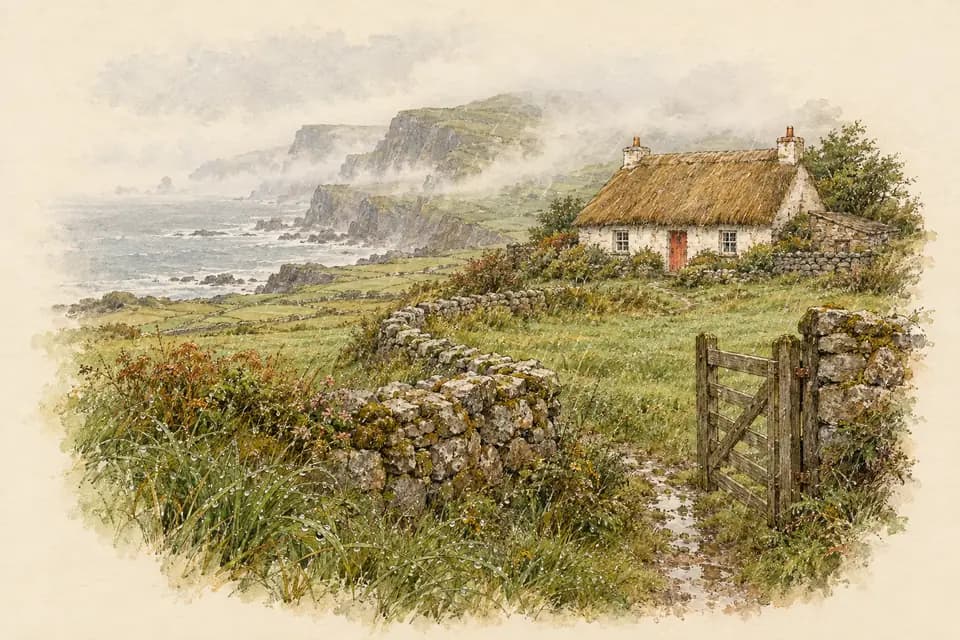
A few to start with
- CaoimheBeautiful, Gentle
- FionnFair
- RoisinLittle Rose
- EoinGod is Gracious
- SiobhanGod is Gracious
- LiamStrong-Willed Warrior
Understanding Irish names
Irish culture is known for its folklore, mythology, and beautiful landscapes. Irish names often carry deep meanings and reflect the country's enchanting heritage.
Their spelling can look unfamiliar to English readers: combinations such as bh, dh, and ao often represent sounds quite different from their individual letters. Many names also have older forms in Irish alongside anglicized versions used in everyday life. You’ll find names linked to legendary figures, place and family histories, and qualities such as brightness or strength. For a story, choose a form that fits your character’s setting and generation, and consider adding a pronunciation note when the spelling is important to the scene.
How to come up with the perfect Irish name
Traditional Irish names may include given names and family names. They often draw inspiration from nature, legends, and history.
Notice the spelling and sound
Irish spelling follows its own sound system, so a name may not be pronounced as an English reader expects. For example, Seán is commonly pronounced “Shawn,” while Ruairí is often rendered “Roor-ee.” Irish also uses the síneadh fada, the accent mark in names such as Éamon and Máire; it can change the vowel sound and belongs in the name’s spelling. A brief pronunciation guide can help readers without replacing the Irish form.
Look to history and name roots
Some Irish names have meanings that are fairly clear, such as Colm, “dove,” and Rónán, “little seal.” Others have disputed origins, or are best understood through the people and stories associated with them. Names such as Méabh and Diarmaid evoke figures from Irish legend, while Pádraig and Bríd carry strong connections to religious history. Treat uncertain explanations as possibilities, not established facts.
Choose a form for your character
Think about where and when your character lives. A traditional Irish-language form may suit a Gaelic-speaking family or a historical setting, while an anglicized form may feel more natural in an English-speaking community. Surnames beginning with Ó or Mac can signal family lineage, but they do not automatically define a character’s personality or status. Check pronunciation, spelling, and the name’s cultural context before using it.
Popular Irish names
Explore Irish names that embody the magic of Ireland's cultural heritage:
| Name | Meaning | Gender |
|---|---|---|
| Caoimhe | Beautiful, Gentle | Female |
| Fionn | Fair | Male |
| Roisin | Little Rose | Female |
| Eoin | God is Gracious | Male |
| Siobhan | God is Gracious | Female |
| Liam | Strong-Willed Warrior | Male |
| Saoirse | Freedom | Female |
| Cillian | Warrior | Male |
| Orla | Golden Princess | Female |
| Tadhg | Poet, Philosopher | Male |
| Aoife | Beautiful, Radiant | Female |
| Oisin | Little Deer | Male |
| Aoibheann | Beautiful | Female |
| Ciaran | Dark-Haired | Male |
| Grainne | Grace | Female |
| Cormac | Charioteer | Male |
| Sinead | God is Gracious | Female |
| Conor | Lover of Hounds | Male |
| Niamh | Bright, Radiant | Female |
| Fergus | Man of Vigor | Male |
60 more Irish names and meanings
Male Irish names
| Name | Meaning |
|---|---|
| Aodh | Fire; an ancient Irish name borne by kings. |
| Aonghus | Traditional name from Irish legend; its etymology is debated. |
| Art | Bear; also the name of early Irish kings. |
| Brian | Etymology debated; associated with high king Brian Boru. |
| Cathal | Often interpreted as “battle ruler.” |
| Colm | Dove. |
| Conall | Traditional warrior name; precise meaning is debated. |
| Dáire | Fruitful or fertile. |
| Diarmaid | Heroic name associated with the Fenian Cycle. |
| Dónal | Irish form of Domhnall; borne by Irish kings. |
| Donnacha | Often interpreted as “brown-haired warrior.” |
| Éamon | Irish form of Edmund; “wealthy protector.” |
| Fiachra | Traditional name associated with the raven. |
| Flann | Red or ruddy. |
| Lochlann | Historically associated with Scandinavia or the Norse lands. |
| Lorcán | Often interpreted as “little fierce one.” |
| Micheál | Irish form of Michael; “who is like God?” |
| Niall | Etymology is uncertain; borne by legendary Irish kings. |
| Pádraig | Irish form of Patrick, from Latin Patricius. |
| Peadar | Irish form of Peter; “rock.” |
| Risteárd | Irish form of Richard; “brave ruler.” |
| Rónán | Little seal. |
| Ruairí | Red king. |
| Seán | Irish form of John; “God is gracious.” |
| Séamus | Irish form of James; “supplanter.” |
| Stiofán | Irish form of Stephen; “crown.” |
| Tomás | Irish form of Thomas; “twin.” |
| Turlough | Anglicized form of Toirdhealbhach, a traditional Irish name. |
| Uilliam | Irish form of William; “resolute protector.” |
| Oscar | Heroic name from Irish legend; its etymology is debated. |
Female Irish names
| Name | Meaning |
|---|---|
| Aisling | Dream or vision. |
| Ailís | Irish form of Alice. |
| Bláthnaid | Little flower. |
| Bríd | Often interpreted as “exalted one.” |
| Brónagh | Traditional name related to brón, “sorrow.” |
| Cáit | Irish form of Kate. |
| Caitlín | Irish form of Catherine. |
| Clíona | Name from Irish mythology; meaning uncertain. |
| Dearbhla | Traditional Irish name with a debated origin. |
| Éabha | Irish form of Eve, associated with “life.” |
| Eilís | Irish form of Elizabeth; “God is my oath.” |
| Eimear | Heroine of the Ulster Cycle; name meaning uncertain. |
| Eithne | Kernel or grain. |
| Lasair | Flame; also used as a traditional given name. |
| Íde | Traditional name associated with an Irish saint. |
| Líadan | Often interpreted as “grey lady.” |
| Mairéad | Irish form of Margaret; “pearl.” |
| Máire | Irish form of Mary; the name’s deeper meaning is debated. |
| Méabh | Often interpreted as “intoxicating”; name of a legendary queen. |
| Muireann | Traditional Irish name; its precise meaning is uncertain. |
| Neasa | Name from Irish legend; its meaning is uncertain. |
| Nóra | Irish usage of Nora, often associated with “honor.” |
| Nuala | Short form of Fionnuala. |
| Peig | Irish form of Margaret; “pearl.” |
| Ríona | Associated with rí, “king,” and interpreted as “queenly.” |
| Sadhbh | Often translated as “sweet” or “good.” |
| Síle | Irish form of Cecilia. |
| Sorcha | Bright or radiant. |
| Treasa | Traditional Irish form of Teresa; origin uncertain. |
Unisex Irish names
| Name | Meaning |
|---|---|
| Ailbhe | Traditional Irish name used for more than one gender; origin uncertain. |
Irish last names
| Name | Meaning |
|---|---|
| Ó Briain | Descendant of Brian; the surname of the O’Brien family. |
| Ó Conchobhair | Descendant of Conchobhar; associated with the medieval Connacht dynasty. |
| Ó Néill | Descendant of Niall; borne by several historic Irish dynasties. |
| Ó Domhnaill | Descendant of Domhnall; the Irish form behind O’Donnell. |
| Ó Súilleabháin | Descendant of Súilleabhán; the name’s deeper origin is uncertain. |
| Ó Ceallaigh | Descendant of Ceallach; the personal name’s meaning is debated. |
| Ó Murchadha | Descendant of Murchadh, a name often interpreted as “sea warrior.” |
| Ó Flannagáin | Descendant of Flannagán; related to Flann, “red” or “ruddy.” |
| Ó Dubhghaill | Descendant of Dubhghall, a historical name meaning “dark foreigner.” |
| Ó hAodha | Descendant of Aodh, meaning “fire.” |
| Mac Cárthaigh | Son of Cárthach, a personal name associated with “loving.” |
| Mac Cionaoith | Son of Cionaoith; an Irish family name also anglicized as McKenna. |
| Mac Giolla Bhríde | Son of a devotee of Bríd or Brigid. |
| Mac an Bhaird | Son of the bard; traditionally linked with poets. |
| Ó Fearghail | Descendant of Fearghal; borne by historic Irish families. |
| Ó Coileáin | Descendant of Coileán; also anglicized as Collins. |
| Ó Ruairc | Descendant of Ruairc; associated with the rulers of Breifne. |
| Ó Maoláin | Descendant of Maolán; the family name’s exact origin varies. |
| Ó Catháin | Descendant of Cathán; an old Irish family name. |
| Ó hÓgáin | Descendant of Ógán, a name related to óg, “young.” |
Irish names: frequently asked questions
What are common Irish names?
Names such as Seán, Pádraig, Máire, and Bríd have long histories in Ireland, while names such as Aisling and Sorcha are also familiar Irish-language choices. Usage changes by generation and region, and many people use anglicized forms alongside Irish spellings. For a believable character, consider the family’s language and era rather than relying on a single list of “typical” names.
How do you pronounce Irish names?
Irish pronunciation does not follow English spelling rules, and regional accents affect how names sound. Seán is commonly pronounced “Shawn,” while Síle is often pronounced “Shee-la.” In names such as Ruairí, the fada marks a long vowel. If your story includes an unfamiliar name, you can give readers a light pronunciation cue without changing its Irish spelling.
What does the name Aisling mean?
Aisling means “dream” or “vision” in Irish. The word also names a poetic genre in which Ireland appears as a woman in a dream or vision, often speaking to the poet about the country’s fate. That literary association can suit a character with a prophetic, imaginative, or culturally rooted role, though the name itself does not imply any particular personality.
Why do Irish surnames start with O’ or Mac?
Ó means “descendant of,” while Mac means “son of” in Irish family names. Ó Néill, for example, means descendant of Niall; Mac an Bhaird means son of the bard. The forms and spellings have changed over time, and not every family uses the traditional Irish spelling today. For fiction, choose a surname that fits the character’s family and setting.
Other world culture name generators
 Korean namesMinji, Joon, Jiwoo
 Japanese namesHana, Haruki, Sora
 Welsh namesCeridwen, Llyr, Maelona
 French namesAmélie, Lucien, Fleur
 Arabic namesLayla, Amir, Zahra
 Hindi namesAarav, Aanya, Vivaan
 German namesLena, Maximilian, Emilia
 Italian namesAlessia, Matteo, Bianca
 Chinese namesMei, Wei, Jingyi
 Spanish namesSofía, Mateo, Valentina
 African namesAmina, Kwame, Nia
 British namesEleanor, Henry, Charlotte
 Greek namesAthena, Apollo, Penelope
 Native American namesAmik, Nayeli, Kȟolá
 Russian namesAnastasia, Mikhail, Natalia
 Turkish namesAylin, Emir, Dilara
 Hawaiian namesLeilani, Kai, Halia
 Egyptian namesAhmed, Layla, Ramesses
Chapter one starts tonight.
Open a blank page, write the first line, and see where it takes you. Your readers are out there.
Plans from $9.99 a month. Cancel any time. Your words are always yours.