Welsh Name Generator
Welsh names stand out for their distinctive letter combinations and sounds: ll is a single consonant, dd sounds like the th in “this,” and w and y can be vowels.
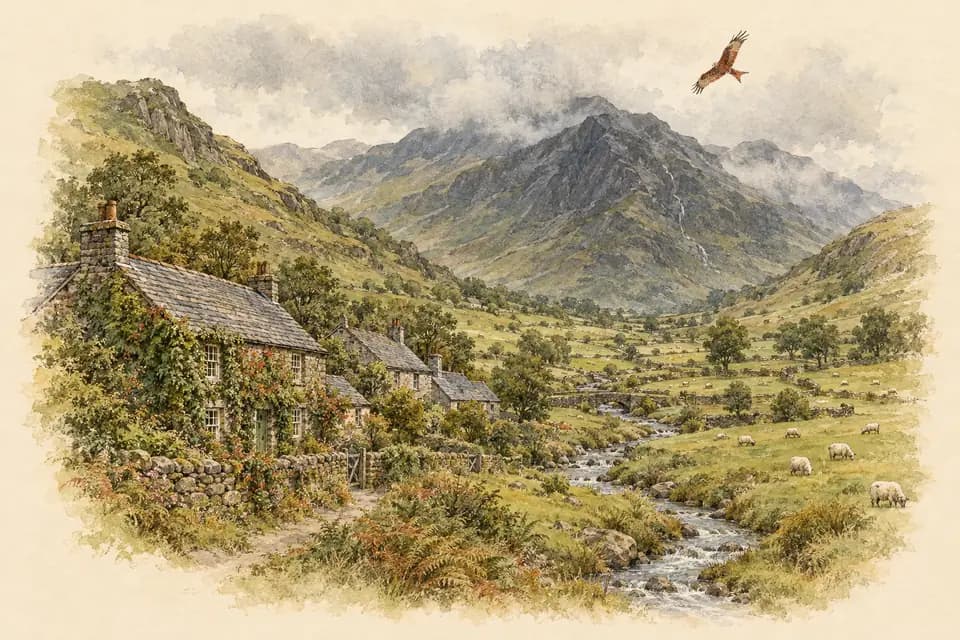
A few to start with
- CeridwenBeautiful as a Poem
- LlyrSea
- MaelonaYellow Brow
- EmyrKing
- RhosynRose
- GoronwyHero
Understanding Welsh names
Welsh culture is deeply rooted in history and folklore, known for its enchanting myths and legends. Names in Welsh culture often carry meaningful connections to nature and legends.
Many names carry centuries of Welsh history, from medieval rulers and poets to figures in the Mabinogi, a collection of Welsh tales. Others draw on everyday words for flowers, birds, and qualities such as beauty or love. For a character, a Welsh name can suggest place, heritage, or a connection to legend. Consider how its spelling and sound fit the character, and whether a traditional, modern, or mythic feel suits your story.
How to come up with the perfect Welsh name
Traditional Welsh names often include unique combinations of letters and sounds, making them distinct and rich in tradition. Many Welsh names have meanings related to nature or mythical stories.
Notice the sounds and spelling
Welsh spelling follows patterns that may be unfamiliar to English readers. The double letters ll and dd each represent one sound, while ff sounds like English f. The letter w can function as a vowel, as in Guto. When choosing a name, check a Welsh pronunciation guide and decide whether the character’s voice, setting, or narration will help readers meet its sounds naturally.
Look for meanings and histories
Some Welsh names have clear links to words: Ffion means “foxglove,” Celyn means “holly,” and Carys is associated with love. Others are better chosen for their history than for a definite translation. Taliesin recalls a legendary bard, while names such as Rhodri and Llywelyn are associated with Welsh rulers. Avoid assigning a precise meaning when a name’s origin is uncertain.
Choose a name for the character
Consider whether your character needs a contemporary Welsh name, a medieval feel, or a link to a specific tale. Check the period and region of your story before combining a given name with a surname. Welsh surnames often began as references to an ancestor, so a family name may reflect a lineage rather than a landscape or occupation.
Popular Welsh names
Discover Welsh names that reflect the beauty of Wales' cultural heritage:
| Name | Meaning | Gender |
|---|---|---|
| Ceridwen | Beautiful as a Poem | Female |
| Llyr | Sea | Male |
| Maelona | Yellow Brow | Female |
| Emyr | King | Male |
| Rhosyn | Rose | Female |
| Goronwy | Hero | Male |
| Blodwen | White Flower | Female |
| Dilys | Genuine | Female |
| Gwilym | Determined Protector | Male |
| Eirian | Shining | Female |
| Cadoc | Battle | Male |
| Elain | Fawn | Female |
| Dewi | Beloved | Male |
| Mabli | Lovable | Female |
| Idris | Fiery Lord | Male |
| Tegwen | Fair and Holy | Female |
| Owain | Youth | Male |
| Glenys | Clean and Holy | Female |
| Caradoc | Loving | Male |
| Branwen | Fair Raven | Female |
61 more Welsh names and meanings
Male Welsh names
| Name | Meaning |
|---|---|
| Aneirin | Name of an early Welsh poet, traditionally linked with the poem Y Gododdin. |
| Bedwyr | Arthurian knight known in Welsh tradition. |
| Bleddyn | Historic Welsh princely name; its original meaning is uncertain. |
| Carwyn | Modern Welsh name commonly interpreted as “blessed love.” |
| Dafydd | Welsh form of David, traditionally interpreted as “beloved.” |
| Emrys | Welsh form of Ambrosius, associated with the legendary Merlin. |
| Geraint | Traditional Welsh name borne by a figure in Arthurian legend. |
| Gethin | Welsh name associated with the meaning “dark” or “dusky.” |
| Huw | Welsh form of Hugh. |
| Ieuan | Welsh form of John, traditionally interpreted as “God is gracious.” |
| Iestyn | Traditional Welsh personal name with medieval roots. |
| Llywelyn | Historic Welsh princely name, borne by Llywelyn the Great. |
| Madog | Medieval Welsh name associated with princes and a later voyage legend. |
| Meurig | Welsh form of Maurice. |
| Rhodri | Historic Welsh royal name; its precise origin is uncertain. |
| Rhys | Traditional Welsh name associated with ardour or enthusiasm. |
| Siôn | Welsh form of John, traditionally interpreted as “God is gracious.” |
| Steffan | Welsh form of Stephen, traditionally interpreted as “crown.” |
| Taliesin | Name of a legendary Welsh bard; commonly translated as “radiant brow.” |
| Urien | Name of a sixth-century Welsh ruler and an Arthurian figure. |
| Guto | Welsh short form of Gruffudd. |
| Gruffudd | Historic Welsh personal name, borne by rulers and princes. |
| Gwalchmai | Arthurian knight; the name is often read as “hawk of May.” |
| Hywel | Traditional Welsh name borne by the ruler Hywel Dda. |
| Ifor | Welsh form of Ivor, used in Wales for centuries. |
| Maredudd | Traditional Welsh name with a long history; its meaning is uncertain. |
| Tudur | Welsh form of the name behind the Tudor dynasty. |
| Trefor | Welsh personal name also used as a place name. |
| Cynan | Historic Welsh princely name. |
| Cai | Welsh Arthurian name of one of Arthur’s companions. |
Female Welsh names
| Name | Meaning |
|---|---|
| Aderyn | Welsh word for “bird”; an uncommon nature-inspired name. |
| Alys | Welsh form of Alice, a name associated with nobility. |
| Anwen | Welsh name commonly understood as “very fair” or “very beautiful.” |
| Carys | Welsh name associated with love. |
| Catrin | Welsh form of Catherine, traditionally associated with “pure.” |
| Efa | Welsh form of Eve, traditionally associated with life. |
| Eleri | Welsh personal name also associated with a river and a saint. |
| Ffion | Welsh word for “foxglove.” |
| Heledd | Name of a figure in early Welsh poetry. |
| Llio | Traditional Welsh personal name with an old literary history. |
| Lowri | Welsh form of Laura, associated with the laurel tree. |
| Manon | Welsh form related to Mari and Marion. |
| Megan | Welsh form of Margaret, traditionally associated with “pearl.” |
| Meinir | Traditional Welsh name also associated with a Welsh saint. |
| Nerys | Welsh personal name with an uncertain origin. |
| Non | Name of Saint Non, traditionally identified as the mother of Saint David. |
| Olwen | Mabinogi heroine whose steps leave white trefoils. |
| Rhiannon | Mabinogi figure; the name is often interpreted as “great queen.” |
| Sioned | Welsh form of Janet, traditionally interpreted as “God is gracious.” |
| Siân | Welsh form of Jane, traditionally interpreted as “God is gracious.” |
| Tanwen | Welsh name often interpreted as “white fire.” |
| Tesni | Welsh name associated with warmth. |
| Gwenllian | Historic Welsh name borne by princesses and other notable women. |
| Angharad | Traditional Welsh name often associated with love or affection. |
| Bethan | Welsh form of Elizabeth, traditionally interpreted as “God is my oath.” |
| Eirlys | Welsh word for “snowdrop.” |
| Eurwen | Welsh compound commonly understood as “golden and fair.” |
| Mair | Welsh form of Mary. |
| Morfudd | Medieval Welsh personal name with an uncertain meaning. |
Unisex Welsh names
| Name | Meaning |
|---|---|
| Ceri | Welsh name used for more than one gender. |
| Celyn | Welsh word for “holly,” used as a given name. |
Welsh last names
| Name | Meaning |
|---|---|
| Jones | Patronymic surname meaning “son of John.” |
| Davies | Patronymic surname meaning “son of David.” |
| Evans | Patronymic surname meaning “son of Evan.” |
| Williams | Patronymic surname meaning “son of William.” |
| Thomas | Surname taken from the given name Thomas. |
| Roberts | Patronymic surname meaning “son of Robert.” |
| Lewis | Surname established in Wales from the given name Lewis. |
| Griffiths | Patronymic surname from the Welsh name Gruffudd. |
| Morgan | Welsh personal name that also became a family surname. |
| Pugh | Surname formed from ap Hugh, meaning “son of Hugh.” |
| Price | Surname formed from ap Rhys, meaning “son of Rhys.” |
| Powell | Surname formed from ap Hywel, meaning “son of Hywel.” |
| Bevan | Surname formed from ab Evan, meaning “son of Evan.” |
| Bowen | Surname formed from ab Owen, meaning “son of Owen.” |
| Parry | Surname formed from ap Harry, meaning “son of Harry.” |
| Probert | Surname formed from ap Robert, meaning “son of Robert.” |
| Prichard | Surname formed from ap Richard, meaning “son of Richard.” |
| Vaughan | From Welsh bychan, “small” or “little.” |
| Lloyd | From Welsh llwyd, meaning “grey” or “grey-haired.” |
| Wynn | From Welsh gwyn, meaning “white” or “fair.” |
Welsh names: frequently asked questions
What are common Welsh names?
Many familiar Welsh names have long histories, including Dafydd, Rhys, and Ieuan for men, and Catrin, Megan, and Siân for women. Some are Welsh forms of names used across Europe, while others, such as Ffion, come directly from Welsh vocabulary. Popularity varies by generation and region.
How do you pronounce Welsh names?
Welsh spelling is fairly regular, but several letters differ from English. The double letter ll is a breathy sound made at the side of the tongue; dd sounds like th in “this,” and ff sounds like f. For example, Siân is commonly pronounced “SHAHN,” while Ffion begins with an ordinary f sound.
What does the Welsh name Ffion mean?
Ffion is the Welsh word for “foxglove,” the flowering plant. It is a familiar feminine given name in Wales and works well for a character with a botanical association or a gentle, nature-connected impression. Its spelling is pronounced with an f sound, not the English “ff” sequence as two separate letters.
Do Welsh surnames have meanings?
Many Welsh surnames began as patronymics, identifying someone as a descendant of a man with a particular given name. Jones means “son of John,” Davies means “son of David,” and Price developed from ap Rhys, “son of Rhys.” Other surnames, such as Lloyd, come from Welsh words; Lloyd means “grey.”
Other world culture name generators
 Korean namesMinji, Joon, Jiwoo
 Japanese namesHana, Haruki, Sora
 French namesAmélie, Lucien, Fleur
 Arabic namesLayla, Amir, Zahra
 Hindi namesAarav, Aanya, Vivaan
 German namesLena, Maximilian, Emilia
 Italian namesAlessia, Matteo, Bianca
 Chinese namesMei, Wei, Jingyi
 Spanish namesSofía, Mateo, Valentina
 Irish namesCaoimhe, Fionn, Roisin
 African namesAmina, Kwame, Nia
 British namesEleanor, Henry, Charlotte
 Greek namesAthena, Apollo, Penelope
 Native American namesAmik, Nayeli, Kȟolá
 Russian namesAnastasia, Mikhail, Natalia
 Turkish namesAylin, Emir, Dilara
 Hawaiian namesLeilani, Kai, Halia
 Egyptian namesAhmed, Layla, Ramesses
Chapter one starts tonight.
Open a blank page, write the first line, and see where it takes you. Your readers are out there.
Plans from $9.99 a month. Cancel any time. Your words are always yours.