Greek Name Generator
Greek names span thousands of years, from names preserved in ancient epics and inscriptions to forms used in Greece today.
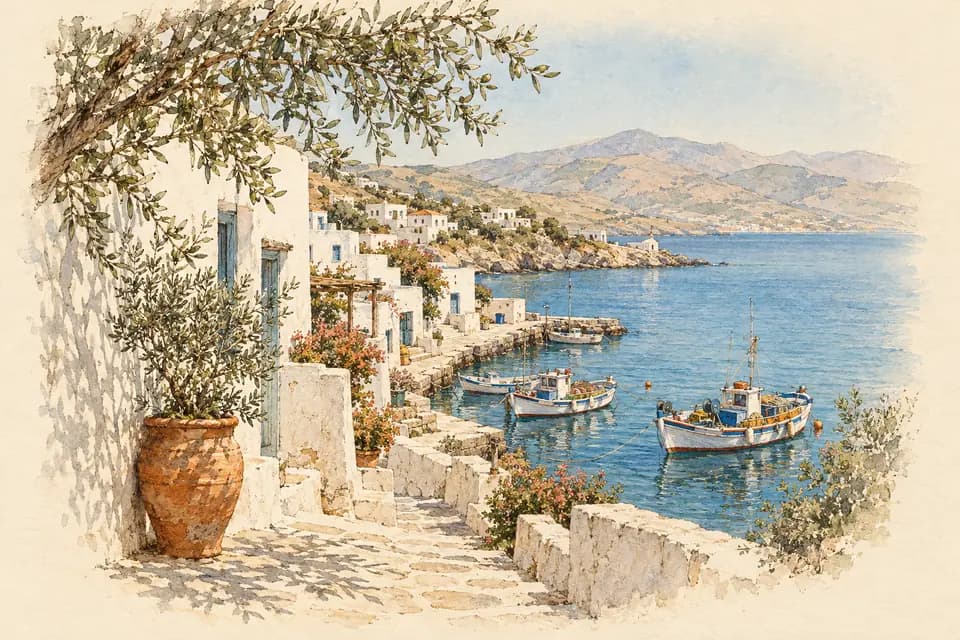
A few to start with
- AthenaGoddess of Wisdom
- ApolloGod of Music and Light
- PenelopeWeaver
- DionysusGod of Wine and Revelry
- HermioneMessenger, Herald
- AresGod of War
Understanding Greek names
Greek culture is known for its rich mythology, philosophy, and contributions to art and science. Greek names often have a timeless and legendary quality.
Many have clear roots in Greek words for qualities, nature, or the divine: Sophia means “wisdom,” while Stavros means “cross.” Others are tied to saints, historical figures, or familiar myths, and some have debated origins. Their rhythms often feature open vowel sounds and endings such as -os, -is, and -a, though naming patterns vary. For a story, choose a name that fits the character’s era and background, then use its sound, associations, or history to add a quiet layer of meaning.
How to come up with the perfect Greek name
Traditional Greek names include given names and family names. They often honor gods, heroes, and virtues. Greek names have deep mythological and historical roots.
How Greek names are formed
Greek names have changed across ancient, Byzantine, and modern periods, so a name’s form can suggest its setting. Ancient names such as Perikles and Ifigeneia carry classical associations, while Nikolaos and Aikaterini are familiar in modern Greece. Many names also have everyday variants or diminutives. Decide whether your character needs a historically specific form, a contemporary Greek name, or a recognizable form suited to a fantasy setting.
Roots, meanings, and associations
Some Greek names draw on recognizable words: Sophia means “wisdom,” Petros means “rock,” and Niki means “victory.” Others honor a saint or echo a figure from literature and history. A name’s apparent meaning is not always its true origin; several famous ancient names have disputed etymologies. When certainty matters, use a well-established meaning, or describe the name through its cultural or historical association instead.
Choosing a name for a story
Start with the character’s time, place, and family background. A classical heroine’s name may feel out of place for a present-day Greek student, while a modern form can sound wrong in an archaic setting. Consider pronunciation and how the name sits beside other names in your cast. You can also use a meaning as a subtle motif, but avoid making every name an obvious clue to a character’s fate.
Popular Greek names
Discover Greek names that evoke the spirit of ancient Greece's cultural heritage:
| Name | Meaning | Gender |
|---|---|---|
| Athena | Goddess of Wisdom | Female |
| Apollo | God of Music and Light | Male |
| Penelope | Weaver | Female |
| Dionysus | God of Wine and Revelry | Male |
| Hermione | Messenger, Herald | Female |
| Ares | God of War | Male |
| Persephone | Bringer of Destruction | Female |
| Hades | God of the Underworld | Male |
| Calliope | Beautiful Voice | Female |
| Heracles | Glory of Hera | Male |
| Eirene | Peace | Female |
| Zeus | God of the Sky and Thunder | Male |
| Cassandra | Prophetess | Female |
| Hermes | Messenger of the Gods | Male |
| Thalia | Blooming, Joyful | Female |
| Pan | God of Nature | Male |
| Daphne | Laurel Tree | Female |
| Poseidon | God of the Sea | Male |
| Phoebe | Radiant, Bright | Female |
| Achilles | Pain | Male |
60 more Greek names and meanings
Male Greek names
| Name | Meaning |
|---|---|
| Alexander | Defender of men. |
| Andreas | Manly; brave. |
| Nikolaos | Victory of the people. |
| Georgios | Farmer; earthworker. |
| Dimitrios | Of Demeter. |
| Ioannis | God is gracious. |
| Theodoros | Gift of God. |
| Vasileios | Royal; kingly. |
| Konstantinos | Steadfast; constant. |
| Leonidas | Ancient Spartan king; associated with lions. |
| Philippos | Lover of horses. |
| Stefanos | Crown; wreath. |
| Petros | Rock; stone. |
| Makarios | Blessed; fortunate. |
| Kyriakos | Of the Lord. |
| Stavros | Cross. |
| Spyridon | Traditional Greek name; origin uncertain. |
| Christos | Anointed. |
| Emmanouil | God is with us. |
| Athanasios | Immortal. |
| Panagiotis | All-holy. |
| Evangelos | Bearer of good news. |
| Charalambos | Shining with joy. |
| Aristides | Ancient Athenian statesman; linked with “best.” |
| Solon | Athenian lawgiver; name origin uncertain. |
| Perikles | Athenian statesman; commonly interpreted as “surrounded by glory.” |
| Xenophon | Athenian historian; often interpreted as “foreign voice.” |
| Lysander | Ancient Spartan commander. |
| Demosthenes | Athenian orator; “people’s strength.” |
| Socrates | Athenian philosopher; name origin uncertain. |
Female Greek names
| Name | Meaning |
|---|---|
| Alexandra | Defender of people. |
| Anastasia | Resurrection. |
| Sophia | Wisdom. |
| Zoe | Life. |
| Eleni | Greek form of Helen; exact origin debated. |
| Despoina | Lady; mistress. |
| Agapi | Love; affection. |
| Chrysanthi | Golden flower. |
| Aikaterini | Traditional Greek form of Catherine; meaning uncertain. |
| Maria | Greek form of Mary; meaning debated. |
| Ifigeneia | Greek mythological heroine; name etymology debated. |
| Antigoni | Heroine of Sophocles’ tragedy; name meaning debated. |
| Ismene | Theban heroine in Greek tragedy; origin uncertain. |
| Elektra | Amber; also a heroine in Greek tragedy. |
| Andromache | Hector’s wife in the Iliad; traditionally read as “battle of men.” |
| Ariadne | Cretan princess in myth; traditional meaning is disputed. |
| Myrto | Myrtle. |
| Theodora | Gift of God. |
| Vasiliki | Royal; kingly. |
| Dimitra | Of Demeter. |
| Evangelia | Good news. |
| Fotini | Bright; luminous. |
| Paraskevi | Preparation; also the Greek name for Friday. |
| Melina | Modern Greek given name; its origin is uncertain. |
| Niki | Victory. |
| Eftychia | Good fortune; happiness. |
| Ourania | Heavenly. |
| Galini | Calm; serenity. |
| Kleio | Glory; name of the Greek Muse of history. |
| Rhea | Titan in Greek mythology; name origin uncertain. |
Greek last names
| Name | Meaning |
|---|---|
| Papadopoulos | A common family name meaning “son of a priest.” |
| Papadakis | Priest-related family name; -akis is a common Cretan diminutive suffix. |
| Theodoropoulos | Descendant of Theodoros. |
| Dimitriadis | Descendant of Dimitrios. |
| Konstantinidis | Descendant of Konstantinos. |
| Nikolaou | Of Nikolaos; formed from the name’s genitive form. |
| Georgiou | Of Georgios; formed from the name’s genitive form. |
| Ioannidis | Descendant of Ioannis. |
| Christodoulou | Servant of Christ. |
| Alexiou | Of Alexios; formed from the name’s genitive form. |
| Papageorgiou | Family name combining papas, “priest,” and Georgios. |
| Papakonstantinou | Family name combining papas, “priest,” and Konstantinos. |
| Makris | Tall or long. |
| Kontos | Short. |
| Mavros | Black; dark. |
| Lykos | Wolf. |
| Argyros | Silver. |
| Sideris | Iron. |
| Pappas | Priest. |
| Vlachos | Historically associated with a Vlach or Aromanian person. |
Greek names: frequently asked questions
What are common Greek names?
Common Greek given names include Georgios, Dimitrios, Ioannis, and Nikolaos for men, and Maria, Eleni, Aikaterini, and Sophia for women. Usage varies by generation and region. Some names also have familiar everyday forms: Giorgos is a common form of Georgios, and Yannis is commonly used for Ioannis.
What does the name Sophia mean in Greek?
Sophia comes from the Greek word sophia, meaning “wisdom.” It has been used as a personal name across Greek-speaking communities and beyond. Writers may choose it for a thoughtful character, but the name itself does not determine personality; its meaning can work as a subtle thematic echo rather than a literal character description.
Are Greek names from mythology still used today?
Some names with ancient or mythological associations remain in use, though familiarity differs by name and generation. Alexandra and Ariadne are recognizable given names, while names such as Persephone are more strongly marked by myth. Historical and biblical traditions also shape modern Greek naming, so not every Greek name comes from mythology.
How can I tell whether a Greek name is male or female?
Many Greek names have recognizable gendered endings, such as masculine -os in Nikolaos and feminine -a in Theodora, but endings alone are not a reliable rule. Family names may also change form by gender: Papadopoulos is commonly masculine, while Papadopoulou is a common feminine form. Check the specific name and context.
Other world culture name generators
 Korean namesMinji, Joon, Jiwoo
 Japanese namesHana, Haruki, Sora
 Welsh namesCeridwen, Llyr, Maelona
 French namesAmélie, Lucien, Fleur
 Arabic namesLayla, Amir, Zahra
 Hindi namesAarav, Aanya, Vivaan
 German namesLena, Maximilian, Emilia
 Italian namesAlessia, Matteo, Bianca
 Chinese namesMei, Wei, Jingyi
 Spanish namesSofía, Mateo, Valentina
 Irish namesCaoimhe, Fionn, Roisin
 African namesAmina, Kwame, Nia
 British namesEleanor, Henry, Charlotte
 Native American namesAmik, Nayeli, Kȟolá
 Russian namesAnastasia, Mikhail, Natalia
 Turkish namesAylin, Emir, Dilara
 Hawaiian namesLeilani, Kai, Halia
 Egyptian namesAhmed, Layla, Ramesses
Chapter one starts tonight.
Open a blank page, write the first line, and see where it takes you. Your readers are out there.
Plans from $9.99 a month. Cancel any time. Your words are always yours.