Romance Title Generator
Romance readers decide in a second whether a book is their kind of love story. Give the generator your trope, heat level and setting, and get titles that tell the right reader they've found it.
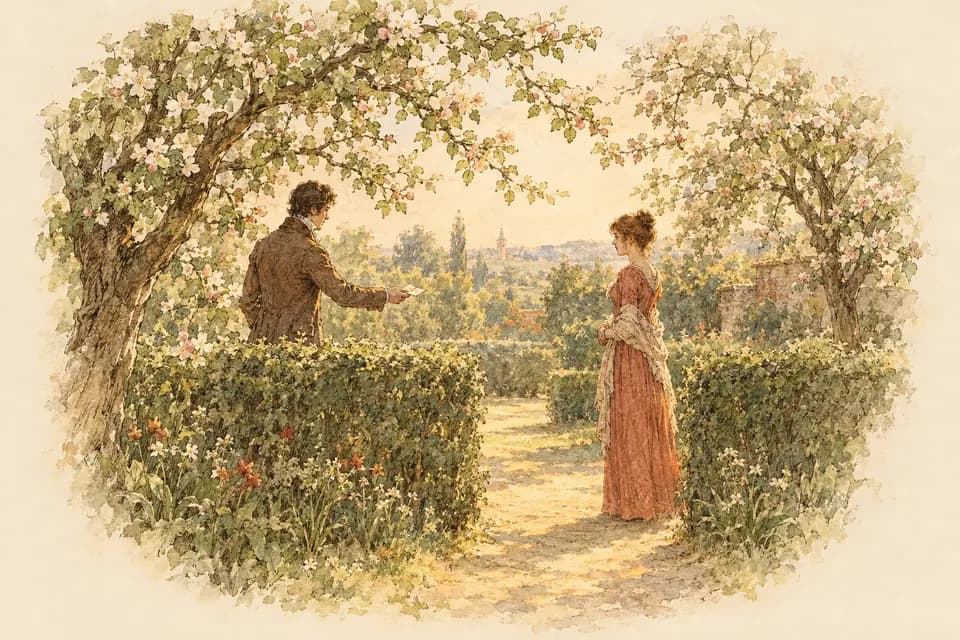
- Sample
The Duke Owes Me a Dance
A wallflower collects on a careless duke's drunken promise.
- Sample
Thirty Days of Pretending
Rival florists fake an engagement to win a wedding contract.
- Sample
Off the Record, Mr. Calloway
A political reporter and the press secretary who keeps stonewalling her.
- Sample
Plus-One Problem
She needs a wedding date; her ex's best man volunteers.
- Sample
Allergic to Cowboys
A city allergist inherits a working horse ranch in Montana.
- Sample
Don't Fall for the Landlord
A broke tenant and the grumpy owner who fixes everything himself.
- Sample
Was It Always You?
Best friends since kindergarten, one wedding toast from the truth.
- Sample
Harbor Lights in December
A Maine lighthouse, a stranded pilot, twelve snowed-in days.
- Sample
Rules for Rakes
A governess writes an etiquette guide for London's worst bachelor.
- Sample
Margot, Unbothered
A divorce lawyer swears off love until a client's brother appears.
- Sample
Bite Me, Your Majesty
A human food taster sworn to protect a vampire prince.
- Sample
Overtime
A hockey captain and the team physio who benched him.
Naming Romance books: what works
Romance is all about the heart's journey. From classic love stories to modern romantic escapades, this genre captures the complexity of relationships and the beauty of love in all its forms.
A Romance title should evoke emotion and curiosity. Consider using words that reflect love, relationships, or emotional transformation. Titles like 'Pride and Prejudice' or 'The Notebook' instantly speak of love's trials and triumphs.
Signal the trope in the title
Romance readers shop by trope. The Love Hypothesis by Ali Hazelwood announces a scientist heroine before you read the blurb, and The Unhoneymooners by Christina Lauren tells you two people are stuck on a trip meant for someone else. Name the setup and the right reader will click.
Let the tone match the heat
Puns and playful phrases usually mean rom-com, banter and a gentler door. Single dark words, possessives and words like 'ruthless' or 'twisted' signal steam or dark romance. Readers use these cues to filter, so a mismatch earns you the wrong reviews.
Build a series readers can binge
Talia Hibbert's Brown sisters books run Get a Life, Chloe Brown, Take a Hint, Dani Brown and Act Your Age, Eve Brown: same shape, new sister. A pattern like that tells readers which book is next and makes each release recognizable on sight. Plan the shape when you title book one.
Put keywords in the subtitle line
Indie romance often lists a descriptive line on retailer pages, such as a small-town second chance romance, so search can find it. That frees the title itself to be short and memorable. Keep the subtitle accurate; readers who feel misled by a trope label say so in reviews.
Well-known Romance titles
Titles that already work in this genre. Read them for shape and length: how many words, how much they give away, what they leave out.
| Title | Author | Published |
|---|---|---|
| Pride and Prejudice | Jane Austen | 1813 |
| The Notebook | Nicholas Sparks | 1996 |
| Outlander | Diana Gabaldon | 1991 |
| Jane Eyre | Charlotte Brontë | 1847 |
| Gone with the Wind | Margaret Mitchell | 1936 |
| The Time Traveler's Wife | Audrey Niffenegger | 2003 |
| Wuthering Heights | Emily Brontë | 1847 |
| A Walk to Remember | Nicholas Sparks | 1999 |
| Twilight | Stephenie Meyer | 2005 |
| Me Before You | Jojo Moyes | 2012 |
| Romeo and Juliet | William Shakespeare | 1597 |
| Brida | Paulo Coelho | 1990 |
| The Fault in Our Stars | John Green | 2012 |
| Eleanor & Park | Rainbow Rowell | 2012 |
| The Rosie Project | Graeme Simsion | 2013 |
| The Bridgertons: The Duke and I | Julia Quinn | 2000 |
| Fifty Shades of Grey | E.L. James | 2011 |
| Beautiful Disaster | Jamie McGuire | 2011 |
| The Hating Game | Sally Thorne | 2016 |
| Beach Read | Emily Henry | 2020 |
 Thrillers & SuspenseA thriller title has one job: make a stranger in an airport pick up the book.
 Historical FictionHistorical novels carry their period in the title: a trade, a house, a war, a city.
 Mystery & CrimeMystery readers like a title that turns out to be a clue.
 Science Fiction and FantasyFantasy titles promise a world; science fiction titles promise an idea.
 Movie, TV, and Literary Fan FictionFic titles follow their own rules: lyric fragments, quotes, puns and lowercase sentences.
 Contemporary FictionContemporary fiction lives on the book club table, where titles are quieter and do more work.
Questions about Romance titles
Do romance titles need the word 'love'?
No, and many bestsellers skip it. The word is so common on the shelf that it rarely sets a book apart by itself. It works best inside a phrase that bends its meaning, like Ali Hazelwood's Love, Theoretically.
Should a historical romance title mention a duke?
If your hero is a duke, readers want to know. Titles like Julia Quinn's The Duke and I and Tessa Dare's The Duchess Deal sell the rank and the setup together. Pair the title with a twist, such as a wager, a deal or a scandal, so it doesn't vanish among the other duke books.
Can a romance title be a pun?
Yes, especially in romantic comedy, where a pun tells readers the tone before they see the cover art. Say it out loud first. If it needs explaining, or only lands after someone has read the book, choose something plainer.
A title deserves a book.
Put it on a cover, write the first chapter under it, and see if it holds.
Plans from $9.99 a month. Cancel any time. Your words are always yours.