Dystopian Plot Generator
Generate dystopian premises where society itself is the antagonist, and your protagonist starts out complicit, comfortable, or simply too busy surviving to fight it.
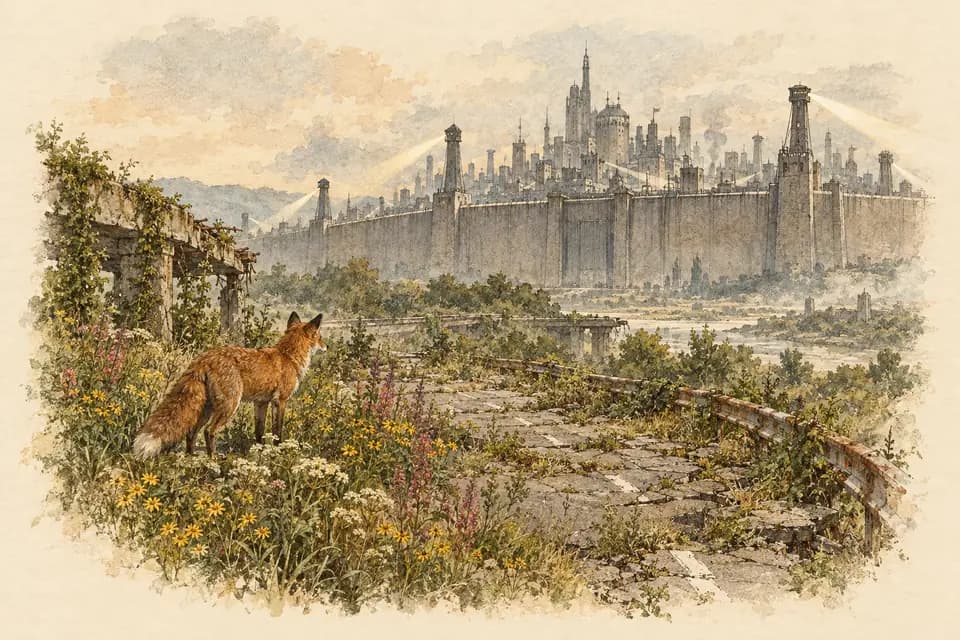
- Sample
The Floor Vote
In Halverton, apartments are assigned by a neighbor score that residents update every week, and Josie Marr keeps hers high by baking for the entire floor. When the elderly man downstairs slips toward the eviction line, the other tenants quietly stop rating him. Josie could save him by spending her own points, but that would cost her daughter a place at the good school.
- Sample
Night License
Ramón Ortega holds a night-work license in Phoenix, where being outside in daylight is illegal from May to October and cooling shelters are assigned by employer. He repairs air units in the rich neighborhoods. When his sister loses her job, she loses her shelter bed, and the only way to buy her a new one is to report the illegal cooling room run by the people who raised him.
- Sample
The Approved Word
Every child in the Republic learns one approved language, and Ada Kerwin teaches it to six-year-olds. At home her grandmother still speaks the old one, in whispers. When Ada's best student writes a forbidden word on the classroom board, the school inspector wants to know where he learned it, and Ada is fairly sure the answer is her own kitchen.
- Sample
Emotionless
In a society where emotions are banned and replaced by mandatory monthly emotion-regulating injections, a young rebel discovers she's immune. She must navigate her feelings and expose the government's true insidious purpose before they find her.
- Sample
Predictive Doom
A tech genius, in a hyper-connected future, invents an AI that predicts a mass extinction event. He races against time to build an underground city, battling government forces determined to bury the truth forever.
- Sample
Toxic Wellspring
A journalist uncovers a conspiracy: the world's water supply is being secretly poisoned by a corporation eager to sell their expensive water purifying systems. Risking her life, she must expose this deadly truth.
- Sample
Harvested
In a world where children are bred purely for organ harvesting, an intended 'donor' escapes, triggering a city-wide manhunt. He grapples with survival and moral dilemmas as he fights for his rightful life.
- Sample
Dominant Variable
After a predictive algorithm labels him as a soon-to-be criminal, a loyal government employee uncovers a plan to create a compliant society under the façade of preemption. Now a fugitive, he must dismantle the system.
Dystopian: what makes the plot work
Dystopian fiction portrays an imagined future society marked by oppressive control, offering a critical lens on current societal issues.
Show who the system works for
Every dystopia is someone's utopia. In The Handmaid's Tale, Margaret Atwood shows Gilead's Commanders and their Wives benefiting from the rules that crush Offred, and that is what makes the regime believable. Decide who is comfortable in your world and why they will defend it.
Start with a complicit hero
Winston Smith spends his days at the Ministry of Truth rewriting old newspapers in Nineteen Eighty-Four. He is part of the machine before he turns against it. A protagonist who has profited from the system has more to lose and more to confess, so their turn feels earned.
Build the rules from a real trend
The strongest dystopias stretch something readers already recognize: surveillance, ratings, entertainment, fertility, debt. Pick one present-day pressure and ask what it looks like after thirty more years with no one stopping it. Then let everyday details (school, food, dating, work) show the change.
Make rebellion cost something
Easy revolutions make a dystopia feel flimsy. Suzanne Collins makes Katniss Everdeen's defiance in The Hunger Games dangerous for everyone around her, and the later books keep counting that cost. If one brave act can topple the regime, it was never frightening.
More Thrillers & Suspense plot generators
Or see the whole shelf: Thrillers & Suspense plot ideas.
 Action ThrillersGenerate action thriller premises built around a capable hero, a bad day and a place they can't easily leave, then shape every fight around what it costs.
 Crime ThrillersGenerate crime thriller premises that keep the reader close to the crime itself: the person planning it, the one covering it up, or the one who stumbled in and…
 Legal ThrillersGenerate legal thriller premises where the danger runs through the law itself: a case that should be routine, a client who is lying, and a verdict that will…
 Political ThrillersGenerate political thriller premises built on power and the people willing to break the rules to keep it: elections, cabinet rooms, coups, and the aides who…
 Spy ThrillersGenerate spy thriller premises where loyalty is the real currency: agents running sources, moles hiding in plain sight, and handlers who may not be telling the truth.
 Military SuspenseGenerate military suspense premises where orders, rank and loyalty to the unit pull against each other, from submarine crews and remote outposts to the…
 HorrorGenerate horror premises with something wrong at the center, a house, a town, a family, a body, and then find the ordinary fear the monster is standing in for.
 Paranormal ThrillersGenerate paranormal thriller premises that pair a supernatural problem with a thriller's engine: an investigation, a deadline, and someone using the uncanny…
Questions about Dystopian plots
What's the difference between dystopian and post-apocalyptic fiction?
Dystopian fiction is about a society that functions, often efficiently, in oppressive ways. Post-apocalyptic fiction is about what happens after society collapses. A book can be both, such as a regime that rises from the ruins, but asking whether your characters are fighting a system or fighting chaos tells you which one you are writing.
Do dystopian novels need to end with the regime falling?
No, and many of the classics don't. Nineteen Eighty-Four ends with Winston broken, and The Handmaid's Tale leaves Offred's fate uncertain. Young adult dystopias more often end in revolution, while adult dystopias are comfortable with a personal victory, a defeat, or a warning.
Is there still a market for dystopian novels?
The wave of young adult dystopian series in the early 2010s left agents wary of familiar setups like teen trials and faction sorting. Adult and literary dystopias have kept finding readers, especially ones tied to climate, technology and reproductive rights. A fresh premise and a distinct voice matter more than the label.
Found the plot? Write it.
Take it into Chapterly: outline it on a board, name the cast, and write chapter one tonight.
Plans from $9.99 a month. Cancel any time. Your words are always yours.