Medieval German Name Generator
German medieval names draw on several layers of history: Old High German and other Germanic languages, Christian saints’ names, and forms shared across medieval Europe.
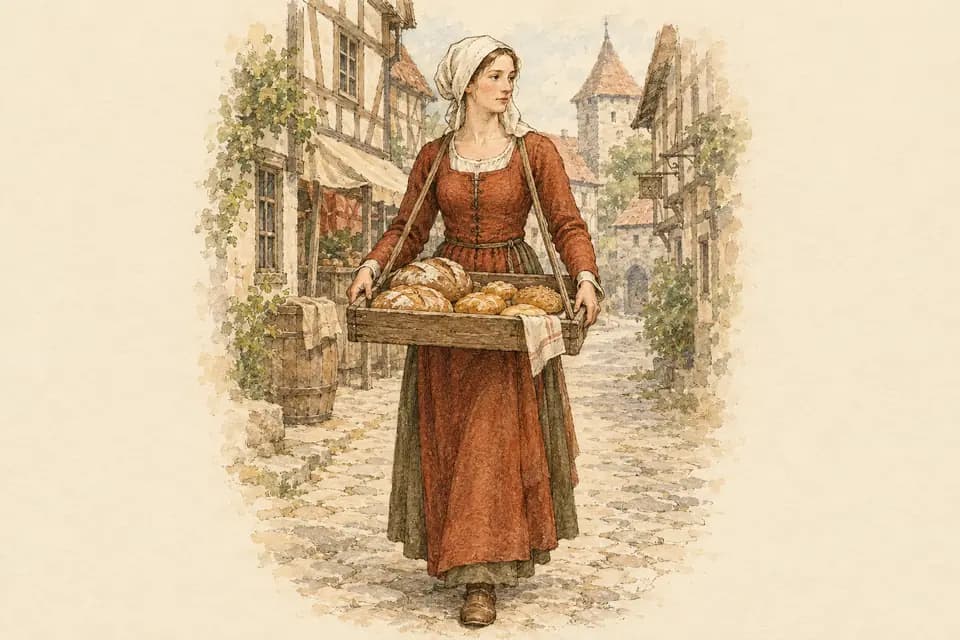
A few to start with
- AdalbertNoble, Bright
- BerthaBright, Famous
- ConradBold Counsel
- ElsaPledged to God
- FriedrichPeaceful Ruler
- GertrudeStrong Spear
Understanding Medieval German names
German medieval names often originate from Old High German, carrying meanings that reflect the virtues and characteristics valued in Germanic culture.
Many older given names combine two elements, creating sturdy sounds and associations with kinship, courage, fame, protection, or leadership. Spellings shifted across regions and centuries, so a name might appear in more than one form in historical records. For fiction, these names can suggest a character’s era or family background, but they need not dictate personality. Pair a recognizable name with a fitting title, byname, or place-name to make a character feel grounded in their setting.
How to come up with the perfect Medieval German name
These names typically combine elements that refer to strength, power, nobility, and other admired traits.
How medieval German names are built
Many early Germanic given names combine two meaningful elements, often drawing on ideas such as strength, fame, kinship, or rule. Dietrich, for example, joins elements associated with “people” and “ruler”; Eberhard combines “boar” and “hardy.” Later medieval naming also drew heavily on Christian tradition, so biblical and saints’ names sit alongside older Germanic forms.
Roots and meanings to notice
Elements such as berht (“bright”), hard (“strong” or “brave”), hild (“battle”), and ric (“ruler” or “powerful”) recur in Germanic names. Their exact interpretation can vary, and not every name has a certain, agreed meaning. Names such as Agnes, Elisabeth, and Sophia instead entered German-speaking communities through religious and broader European traditions.
Choosing a name for your story
Consider when and where your character lives: medieval German-speaking lands covered many regions, and naming customs changed over time. A noblewoman’s recorded name may differ from a villager’s familiar form; a byname could identify a trade, home village, appearance, or parent. Use a name’s sound and history as texture, rather than treating its meaning as a fixed personality description.
Popular Medieval German names
German names from the medieval era are a testament to the culture’s rich history and influence in Europe.
| Name | Meaning | Gender |
|---|---|---|
| Adalbert | Noble, Bright | Male |
| Bertha | Bright, Famous | Female |
| Conrad | Bold Counsel | Male |
| Elsa | Pledged to God | Female |
| Friedrich | Peaceful Ruler | Male |
| Gertrude | Strong Spear | Female |
| Heinrich | Home Ruler | Male |
| Ida | Industrious One | Female |
| Jurgen | Farmer | Male |
| Klara | Bright, Clear | Female |
| Wolfgang | Path of the Wolf | Male |
| Hildegard | Battle Enclosure | Female |
| Siegfried | Victory Peace | Male |
| Adelheid | Noble Nature | Female |
| Lothar | Famous Warrior | Male |
| Greta | Pearl | Female |
| Bernhard | Strong as a Bear | Male |
| Lieselotte | God is My Oath | Female |
| Rudolf | Famous Wolf | Male |
62 more Medieval German names and meanings
Male Medieval German names
| Name | Meaning |
|---|---|
| Anselm | Old Germanic name traditionally interpreted as divine protection. |
| Albrecht | Noble and bright. |
| Alwin | Noble friend. |
| Arnold | Eagle and power. |
| Balthasar | Biblical king’s name used in medieval German lands. |
| Berthold | Bright ruler. |
| Bruno | Brown; also borne by medieval saints and nobles. |
| Burkhard | Fortress and strength. |
| Dietmar | People and fame. |
| Dietrich | People and ruler. |
| Eberhard | Boar and hardy strength. |
| Eckhard | Sword edge and bravery. |
| Emmerich | Medieval Germanic name; its exact meaning is uncertain. |
| Engelbert | Angel and brightness. |
| Erhard | Honor and bravery. |
| Gebhard | Gift and strength. |
| Giselher | Pledge and army. |
| Gotthard | God and strength. |
| Hartmann | Strong man. |
| Hartwig | Strength and battle. |
| Hermann | Army and man. |
| Lambert | Land and brightness. |
| Manfred | Strength and peace. |
| Ottmar | Wealth and fame. |
| Reinhold | Counsel and rule. |
| Ruprecht | Bright fame. |
| Theobald | People and boldness. |
| Udo | Wealth or prosperity. |
| Ulrich | Inherited wealth and rule. |
| Wernher | Old Germanic name associated with protection and an army. |
Female Medieval German names
| Name | Meaning |
|---|---|
| Agnes | Greek name associated with purity. |
| Almut | Noble spirit or courage. |
| Amalia | Industrious; linked to a Germanic root for work. |
| Beatrix | Latin name traditionally interpreted as she who brings happiness; etymology debated. |
| Bertrade | Bright strength. |
| Brunhild | Armor and battle. |
| Cäcilia | Medieval saint’s name; its exact meaning is uncertain. |
| Cunigunde | Kin and battle. |
| Diemut | People and courage. |
| Eberhild | Boar and battle. |
| Elisabeth | My God is an oath. |
| Ermentrud | Whole and strength. |
| Gisela | Pledge or hostage. |
| Hedwig | Battle and combat. |
| Irmingard | Great or whole, with protection. |
| Judith | Woman of Judea. |
| Mathilde | Strength in battle. |
| Margarete | Pearl. |
| Oda | Wealth or prosperity. |
| Ottilia | Associated with wealth or fortune. |
| Richenza | Medieval German noblewoman’s name; meaning uncertain. |
| Roswitha | Fame and strength. |
| Sibylle | Prophetess. |
| Sophia | Wisdom. |
| Swanhild | Swan and battle. |
| Walburga | Fortress and protection. |
| Wulfhild | Wolf and battle. |
| Liutgard | People and protection. |
| Emma | Whole or universal. |
| Berengaria | Bear and spear. |
| Fastrada | Early medieval Germanic name; exact meaning uncertain. |
| Regina | Queen. |
Medieval German last names
| Name | Meaning |
|---|---|
| Bach | A stream; a topographical byname. |
| Bauer | Farmer or peasant. |
| Becker | Baker. |
| Fischer | Fisher. |
| Keller | Cellarer or keeper of a cellar. |
| Klein | Small; often a descriptive byname. |
| Koch | Cook. |
| König | King; sometimes a nickname or occupational byname. |
| Krämer | Small merchant or shopkeeper. |
| Müller | Miller. |
| Roth | Red; possibly a descriptive byname. |
| Schäfer | Shepherd. |
| Schmidt | Smith. |
| Schneider | Tailor. |
| Schulz | A village official or headman. |
| Schuster | Shoemaker. |
| Vogel | Bird; possibly a nickname. |
| Wagner | Wagon maker or carter. |
| Weber | Weaver. |
| Zimmermann | Carpenter. |
Medieval German names: frequently asked questions
What are common German medieval names?
Common choices varied by period and region. Germanic names such as Heinrich, Dietrich, and Mathilde appear alongside Christian names such as Agnes, Elisabeth, and Sophia. For a historically textured cast, mix naming traditions rather than giving every character a compound Germanic name.
What do German names like Dietrich and Brunhild mean?
Many older Germanic names combine elements. Dietrich is commonly understood through elements meaning “people” and “ruler,” while Brunhild combines elements associated with armor and battle. These glosses are useful clues, but historical spellings and interpretations can vary, and a name’s meaning does not define its bearer.
How can I choose a German name for a medieval character?
Start with the character’s region, social setting, and approximate century. Then choose a name that fits the tone: a noble might suit Cunigunde or Ulrich, while a craftsperson could have a familiar given name paired with an occupational byname such as Müller or Weber. Remember that usage changed across medieval centuries.
Did medieval Germans have surnames?
Some people used bynames based on trade, place, family, or appearance, such as Müller (“miller”) or Klein (“small”). Their use and inheritance varied; fixed family surnames became established gradually, not everywhere at once. For an earlier medieval setting, a descriptive byname may feel more appropriate than a modern-style inherited surname.
Other medieval name generators
Chapter one starts tonight.
Open a blank page, write the first line, and see where it takes you. Your readers are out there.
Plans from $9.99 a month. Cancel any time. Your words are always yours.