Greek God Name Generator
Greek mythological names come from a language with crisp consonants, resonant vowels, and endings that shift with grammar.
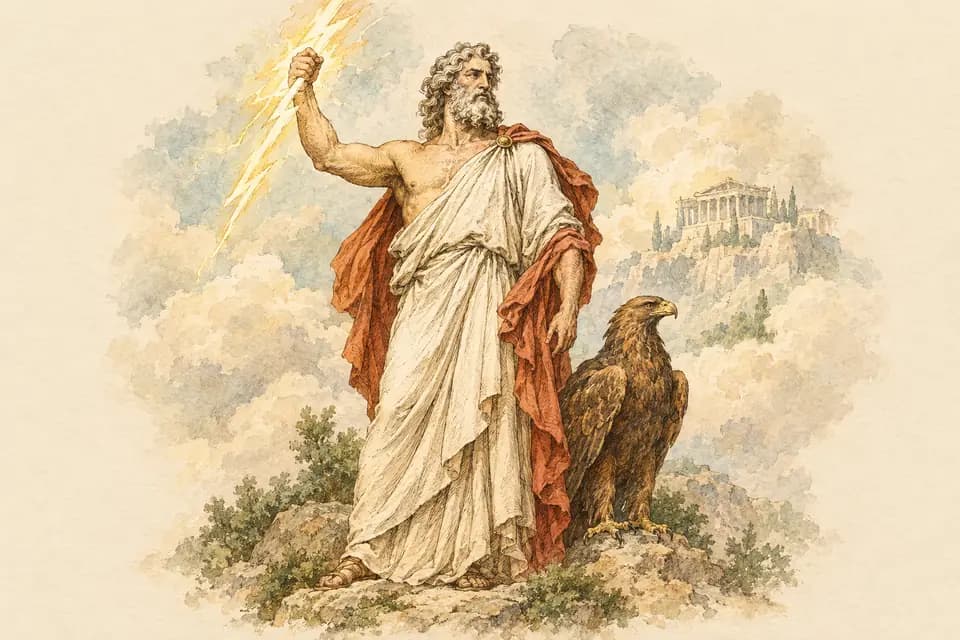
A few to start with
- ZeusSky Father
- HeraQueen of Heaven
- ApolloGod of Music and Arts
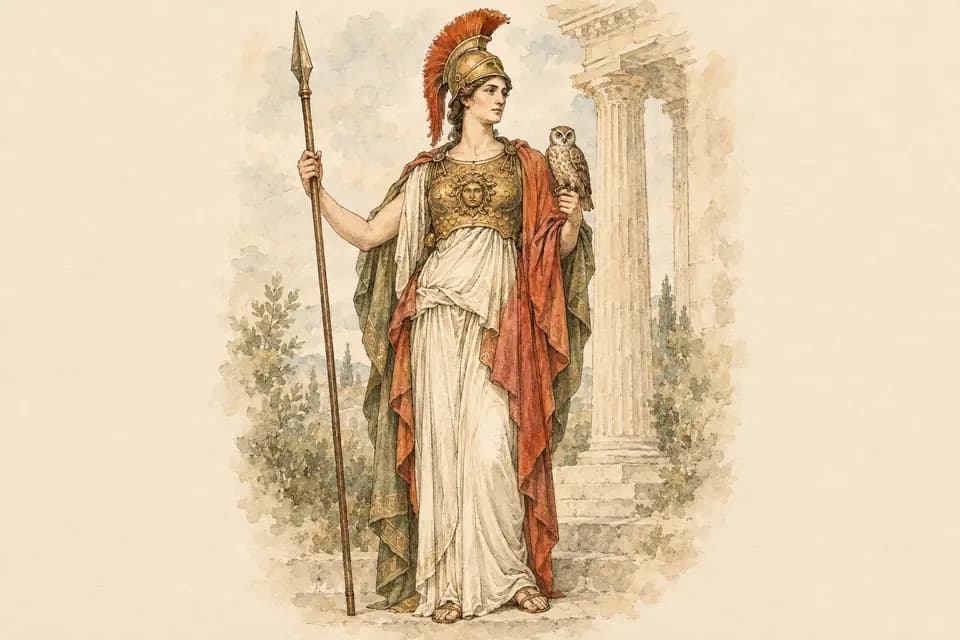
- AthenaGoddess of Wisdom
- PoseidonGod of the Sea
- ArtemisGoddess of Hunting and Wilderness
Understanding Greek God names
Greek gods are a pantheon of powerful and influential deities from ancient Greek mythology. They are known for their unique personalities, domains, and epic stories. From Zeus, the king of the gods, to Athena, the goddess of wisdom, each Greek god has a distinct role in the divine hierarchy.
Many are tied to a deity’s domain, a family of immortals, or a place of worship, so a name can suggest a character’s role before the story explains it. The myths also preserve local variations: a god might have different titles and stories in different regions. Writers can draw on familiar figures or lesser-known powers for names with ancient texture, then use epithets to signal a character’s reputation, allegiance, or aspect.
How to come up with the perfect Greek God name
Greek god names are often derived from their attributes and domains. Names like Zeus, Hera, and Apollo are common among Greek gods.
How Greek names are shaped
Greek names often end in vowels, especially -os for masculine names and -ē or -a for feminine names, though these are patterns rather than rules. Roman spellings may differ: Kronos is also written Cronus, and Hēlios is commonly rendered Helios. Choose one transliteration style and keep it consistent. For a myth-inspired cast, familiar spellings are easier to recognize, while less common forms can give a name a more scholarly or regional feel.
Names with mythic roots
Many names belong to divine lineages: Titans such as Rhea and Hyperion precede the Olympian generation in Hesiod’s account. Others identify a power or role, such as Hypnos, associated with sleep, or Eileithyia, associated with childbirth. An epithet can add another layer: Athena Polias is the city’s protectress, while Poseidon Hippios is linked with horses. Treat these associations as story material, not strict rules for a character’s personality.
Choosing a name for a story
Start with the effect you want: a short, familiar name can make a god feel immediate, while a rarer name may suggest an ancient or unfamiliar power. Check whether your choice is a deity, a personified force, or a mythic figure with a more complicated status. You can pair a personal name with an epithet or place association to distinguish characters. For invented settings, adapt the sound carefully without presenting a new form as an authentic Greek name.
Popular Greek God names
Discover a world of Greek god names inspired by ancient mythology:
| Name | Meaning | Gender |
|---|---|---|
| Zeus | Sky Father | Male |
| Hera | Queen of Heaven | Female |
| Apollo | God of Music and Arts | Male |
| Athena | Goddess of Wisdom | Female |
| Poseidon | God of the Sea | Male |
| Artemis | Goddess of Hunting and Wilderness | Female |
| Hades | God of the Underworld | Male |
| Demeter | Goddess of Agriculture | Female |
| Ares | God of War | Male |
| Aphrodite | Goddess of Love and Beauty | Female |
| Hermes | Messenger of the Gods | Male |
| Hestia | Goddess of the Hearth | Female |
| Dionysus | God of Wine and Celebration | Male |
| Persephone | Queen of the Underworld | Female |
| Hephaestus | God of Fire and Smithing | Male |
| Iris | Goddess of the Rainbow | Female |
| Eros | God of Love and Desire | Male |
| Nemesis | Goddess of Revenge | Female |
| Pan | God of the Wild | Male |
| Nike | Goddess of Victory | Female |
60 more Greek God names and meanings
Male Greek God names
| Name | Meaning |
|---|---|
| Cronus | Titan associated with the harvest and father of the Olympians. |
| Oceanus | Titan who personified the vast river encircling the world. |
| Hyperion | Titan associated with heavenly light; father of Helios, Selene, and Eos. |
| Coeus | Titan associated with intelligence and the celestial axis. |
| Crius | Titan whose myths are less detailed than those of his siblings. |
| Iapetus | Titan and father of Atlas, Prometheus, and Epimetheus. |
| Atlas | Titan condemned to bear the heavens. |
| Prometheus | Titan famed for giving fire to humanity. |
| Epimetheus | Titan associated with hindsight; husband of Pandora. |
| Helios | Personification of the Sun who drove his chariot across the sky. |
| Erebus | Primordial personification of deep darkness. |
| Aether | Primordial personification of the bright upper air. |
| Morpheus | Dream-shaping figure among the Oneiroi. |
| Thanatos | Personification of death. |
| Hypnos | Personification of sleep and twin of Thanatos. |
| Phobos | Personification of fear; companion of Ares in battle. |
| Deimos | Personification of dread; companion of Ares in battle. |
| Asclepius | God of medicine and healing. |
| Priapus | Fertility god associated with gardens and livestock. |
| Triton | Sea god, often shown with a conch shell. |
| Nereus | Wise, shape-changing sea god called the Old Man of the Sea. |
| Proteus | Shape-changing sea deity known for prophecy. |
| Glaucus | Mortal fisherman transformed into a sea god. |
| Aeolus | Keeper or ruler of the winds in different mythic traditions. |
| Boreas | Personification of the north wind. |
| Zephyrus | Personification of the west wind. |
| Notus | Personification of the south wind. |
| Eurus | Personification of the east wind. |
| Pallas | Titan sometimes associated with war; the name also appears in other myths. |
| Charon | Ferryman who carried the dead across the underworld’s rivers. |
Female Greek God names
| Name | Meaning |
|---|---|
| Rhea | Titan mother of several major Olympian gods. |
| Tethys | Titaness associated with fresh water and mother of the Oceanids. |
| Theia | Titaness associated with sight and shining light. |
| Phoebe | Titaness associated with prophecy and linked with Delphi. |
| Themis | Titaness of divine law, order, and customary justice. |
| Mnemosyne | Titaness of memory and mother of the Muses. |
| Metis | Titaness of wisdom and cunning counsel. |
| Leto | Mother of Apollo and Artemis. |
| Asteria | Titaness associated with stars and prophetic dreams. |
| Eos | Goddess and personification of the dawn. |
| Selene | Goddess and personification of the Moon. |
| Hecate | Goddess associated with magic, crossroads, and the night. |
| Hebe | Goddess of youth and cupbearer to the gods. |
| Tyche | Goddess and personification of fortune or chance. |
| Enyo | Goddess associated with war and destruction. |
| Eris | Goddess and personification of strife and discord. |
| Eileithyia | Goddess of childbirth. |
| Hemera | Primordial personification of day. |
| Nyx | Primordial personification of night. |
| Gaia | Primordial goddess and personification of Earth. |
| Thalassa | Primordial personification of the sea. |
| Amphitrite | Sea goddess and queen of the sea in many traditions. |
| Thetis | Sea nymph, mother of Achilles, and one of the Nereids. |
| Galatea | A Nereid; also the name of a figure in another myth. |
| Maia | Pleiad nymph and mother of Hermes. |
| Dione | Goddess whose parentage and role vary between ancient sources. |
| Styx | Goddess and personification of the underworld river. |
| Clotho | One of the Fates; she spun the thread of life. |
| Lachesis | One of the Fates; she measured the thread of life. |
| Atropos | One of the Fates; she cut the thread of life. |
Greek God last names
| Name | Meaning |
|---|---|
| Xenios | Guest-friend or protector of guests; an epithet of Zeus. |
| Horkios | Of oaths; an epithet of Zeus as guardian of sworn promises. |
| Ombrios | Rain-bringing; an epithet associated with Zeus. |
| Keraunios | Of the thunderbolt; an epithet associated with Zeus. |
| Polias | Of the city; an epithet for Athena as city protectress. |
| Parthenos | Maiden; an epithet of Athena. |
| Ergane | Of crafts or skilled work; an epithet of Athena. |
| Pythios | Of Pytho, the ancient name associated with Apollo’s sanctuary at Delphi. |
| Delios | Of Delos, Apollo’s birthplace in a major mythic tradition. |
| Agrotera | Of the wilds; an epithet of Artemis as huntress. |
| Lochia | Of childbirth; an epithet associated with Artemis. |
| Ourania | Heavenly; an epithet of Aphrodite. |
| Pandemos | Of all the people; an epithet of Aphrodite. |
| Enosichthon | Earth-shaker; an epithet of Poseidon. |
| Hippios | Of horses; an epithet associated with Poseidon. |
| Thesmophoros | Bringer of sacred ordinances; an epithet of Demeter. |
| Teleia | An epithet of Hera associated with marriage and its fulfillment. |
| Psychopompos | Guide of souls; an epithet of Hermes. |
| Eleutherios | The liberator; an epithet of Dionysus. |
| Chthonia | Of the earth or underworld; an epithet used for goddesses. |
Greek God names: frequently asked questions
What are common Greek names?
Well-known names from Greek mythology include Zeus, Hera, Apollo, Athena, and Hermes. Less familiar divine names include Rhea, Selene, Hypnos, and Themis. Some are personal names; others are also the names of forces or roles personified as deities. For a story, familiar names quickly signal mythic influence, while rarer ones can make a character feel less expected.
What does Athena mean?
The origin and original meaning of Athena’s name are uncertain. She is best known in Greek myth as a goddess of wisdom, strategic warfare, and crafts, and as the protectress of Athens. Athena Polias means Athena in her role as protector of the city; Polias is an epithet, not a confirmed translation of her personal name.
Are Greek god names gendered?
In myth, most divine names refer to figures presented as male or female, and Greek name endings often reflect grammatical gender. For example, Helios is a male sun deity, while Selene is a female moon deity. Endings are clues, not guarantees: use the mythological figure’s identity as your guide, especially when adapting a name for a fictional character.
Did ancient Greek gods have surnames?
Greek gods generally were not identified by inherited family surnames in the modern sense. People distinguished aspects of a deity with epithets, such as Zeus Xenios, protector of guests, or Athena Polias, protectress of the city. Writers can use an epithet like a title or byname, while keeping in mind that its meaning often points to a specific cult or role.
Other gods name generators

Chapter one starts tonight.
Open a blank page, write the first line, and see where it takes you. Your readers are out there.
Plans from $9.99 a month. Cancel any time. Your words are always yours.