Roman God Name Generator
Roman divine names often sound formal and weighty, with Latin endings such as -us, -a, and -um.
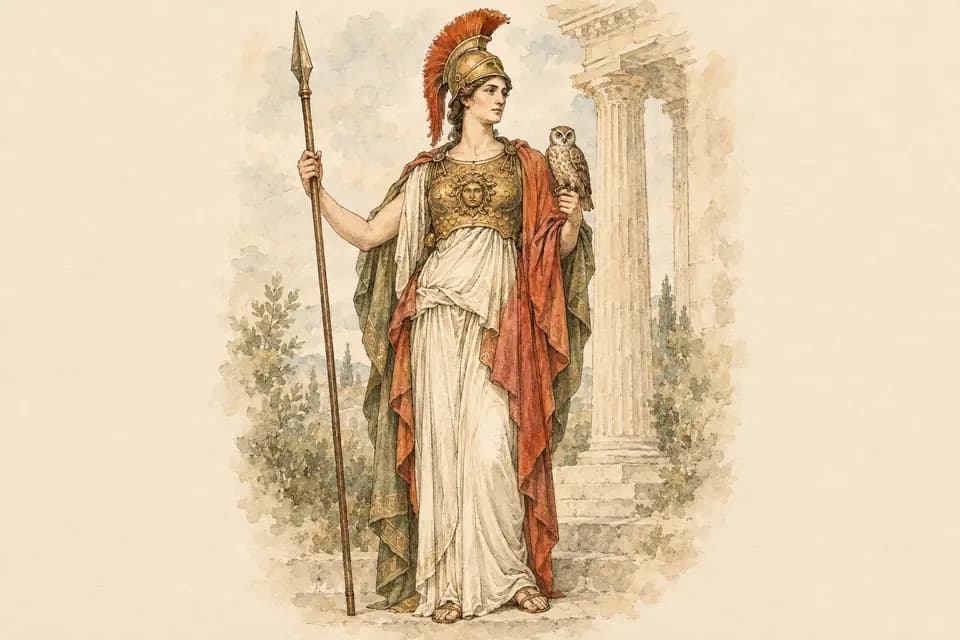
A few to start with
- JupiterSupreme God
- JunoGoddess of Marriage
- MarsGod of War
- VenusGoddess of Love
- NeptuneGod of the Sea
- DianaGoddess of the Hunt
Understanding Roman God names
Roman gods are the deities from ancient Roman mythology, heavily influenced by Greek mythology. They represent various aspects of life, nature, and society and played a significant role in Roman religious practices. From Jupiter, the king of the gods, to Venus, the goddess of love, each Roman god has a distinct character and significance.
Some name a god’s domain directly: Spes is hope, while Terminus protects boundaries. Others belong to ancient cults whose stories grew over centuries, blending local Italian traditions with Greek influence. For writers, these names can signal a character’s sphere of power, civic role, or connection to a particular place. Use a familiar deity for instant recognition, or choose a less-known name when you want a more mysterious figure. Pairing a divine name with a Roman family name or epithet can help ground the character in a specific setting.
How to come up with the perfect Roman God name
Roman god names often align with their Greek counterparts but may have distinct Roman characteristics. Names like Jupiter, Juno, and Mars are common among Roman gods.
How Roman divine names are built
Roman gods may have a single name, a title, or a name paired with an epithet that narrows their role. Many divine names are Latin nouns or personifications, such as Concordia (harmony) and Victoria (victory). Others, including Aesculapius, reflect the adoption of a deity from another culture. A name ending alone does not reliably reveal a god’s power or personality.
Notice roots, domains, and local traditions
Some names have clear Latin associations: Sol means sun, and Nox means night. Others are best understood through their cults and stories rather than a certain name-origin. Roman religion also included household spirits, agricultural powers, and guardians of springs or boundaries. These details can suggest a character’s responsibilities without requiring them to behave like a human ruler.
Choose a name for your story
Start with the role the deity plays: a boundary guardian, harvest power, or keeper of civic promises. Choose a widely recognized name if readers need immediate context, or a more obscure one to create discovery. Check whether a name is an epithet or a distinct deity before treating it as a separate character. A Roman family name can add a mortal, historical texture.
Popular Roman God names
Discover a realm of Roman god names inspired by the rich mythology of ancient Rome:
| Name | Meaning | Gender |
|---|---|---|
| Jupiter | Supreme God | Male |
| Juno | Goddess of Marriage | Female |
| Mars | God of War | Male |
| Venus | Goddess of Love | Female |
| Neptune | God of the Sea | Male |
| Diana | Goddess of the Hunt | Female |
| Mercury | Messenger God | Male |
| Ceres | Goddess of Agriculture | Female |
| Bacchus | God of Wine | Male |
| Minerva | Goddess of Wisdom | Female |
| Pluto | God of the Underworld | Male |
| Vesta | Goddess of the Hearth | Female |
| Apollo | God of Music and Arts | Male |
| Proserpina | Goddess of Springtime | Female |
| Janus | God of Beginnings | Male |
| Fortuna | Goddess of Luck | Female |
| Mars Ultor | Avenger | Male |
| Pax | Goddess of Peace | Female |
| Hercules | Heroic Strength | Male |
| Bellona | Goddess of War | Female |
59 more Roman God names and meanings
Male Roman God names
| Name | Meaning |
|---|---|
| Quirinus | Roman state god associated with citizens and Sabine traditions |
| Vulcan | God of fire, smithing, and destructive heat |
| Saturn | Agricultural god celebrated in the Saturnalia |
| Faunus | God associated with forests, fields, and prophecy |
| Silvanus | Guardian of woods, fields, and rural boundaries |
| Terminus | Protector of boundary stones and property limits |
| Portunus | God of harbors, keys, and doorways |
| Volturnus | River deity associated with the Volturnus |
| Summanus | God of thunder at night |
| Consus | God associated with stored grain and harvest |
| Liber | God of wine, fertility, and freedom |
| Picus | Prophetic woodland god linked with the woodpecker |
| Tiberinus | Personification and guardian of the Tiber River |
| Aesculapius | Healing god adopted into Roman religion |
| Fons | God of springs and water sources |
| Robigus | Deity invoked for protection from crop rust |
| Vertumnus | God of gardens, seasons, and change |
| Somnus | God of sleep |
| Orcus | Underworld power associated with death and punishment |
| Sol | Roman personification and god of the sun |
| Caelus | Personification of the heavens and sky |
| Lateranus | Deity associated with the hearth and brick ovens |
| Mutunus Tutunus | Roman fertility deity honored in marriage rites |
| Priapus | Garden and fertility god adopted from Greek tradition |
| Aius Locutius | Divine voice said to have warned Rome of danger |
| Vaticanus | Deity associated with an infant’s first cry |
| Soranus | Deity worshipped at Mount Soracte |
| Genius | Protective spirit associated with a person or place |
Female Roman God names
| Name | Meaning |
|---|---|
| Ops | Goddess of abundance and agricultural plenty |
| Tellus | Earth goddess associated with fertility and the land |
| Luna | Goddess and personification of the moon |
| Aurora | Goddess and personification of dawn |
| Flora | Goddess of flowers and springtime |
| Pomona | Goddess of fruit trees and orchards |
| Carmenta | Goddess associated with childbirth and prophecy |
| Angerona | Goddess associated with silence and Rome’s protection |
| Dea Dia | Goddess of growth honored by the Arval Brethren |
| Anna Perenna | Goddess associated with the turning year |
| Mater Matuta | Goddess associated with dawn and childbirth |
| Feronia | Goddess associated with freedom and wild nature |
| Egeria | Prophetic water nymph and divine adviser |
| Laverna | Goddess associated with thieves and secrecy |
| Vacuna | Sabine goddess associated with rest and rural life |
| Mefitis | Goddess associated with volcanic vapors and springs |
| Nox | Personification and goddess of night |
| Victoria | Personification and goddess of victory |
| Salus | Goddess and personification of health and welfare |
| Spes | Personification and goddess of hope |
| Fides | Goddess and personification of trust and good faith |
| Concordia | Goddess and personification of harmony |
| Libertas | Goddess and personification of liberty |
| Juventas | Goddess associated with youth |
| Aequitas | Personification of fairness and equitable dealings |
| Cloacina | Goddess associated with purification and Rome’s sewers |
| Nona | One of the Parcae, the Roman goddesses of fate |
| Decima | One of the Parcae, the Roman goddesses of fate |
| Morta | One of the Parcae, the Roman goddesses of fate |
| Febris | Goddess invoked in connection with fever |
Unisex Roman God names
| Name | Meaning |
|---|---|
| Pales | Deity of flocks and pastoral life; gender varies by tradition |
Roman God last names
| Name | Meaning |
|---|---|
| Aemilius | Roman family name of the gens Aemilia |
| Cornelius | Roman family name of the gens Cornelia |
| Julius | Roman family name of the gens Julia |
| Valerius | Family name associated with the Latin valere, “to be strong” |
| Octavius | Family name derived from the Latin word for eighth |
| Fabius | Roman family name traditionally linked to the bean |
| Marcius | Roman family name of the gens Marcia |
| Tullius | Roman family name of the gens Tullia |
| Sergius | Roman family name of the gens Sergia |
| Licinius | Roman family name of the gens Licinia |
| Antonius | Roman family name of the gens Antonia |
| Domitius | Roman family name of the gens Domitia |
| Fulvius | Family name associated with the Latin word for tawny |
| Cassius | Roman family name of the gens Cassia |
| Scipio | Cognomen meaning “staff” in Latin |
| Cato | Roman cognomen associated with wisdom and shrewdness |
| Brutus | Cognomen meaning “dull” or “stupid” in Latin |
| Rufus | Cognomen meaning “red-haired” in Latin |
| Balbus | Cognomen meaning “stammering” in Latin |
| Naso | Cognomen referring to a prominent nose |
Roman God names: frequently asked questions
What are common Roman names?
For Roman gods, familiar names include Saturn, Vulcan, and Sol, while Victoria and Flora are well-known goddesses. Roman citizens also used family names such as Julius, Cornelius, and Valerius. Divine names and human family names serve different purposes, so decide whether your character is a deity, a mortal, or a figure claiming divine status.
What does Quirinus mean?
Quirinus is the name of an important Roman state god, associated with Rome’s citizen community and Sabine traditions. The origin of the name is debated, so it is safer not to assign it a definite literal translation. For a story, the name can suggest civic duty, an ancient Roman identity, or a power tied to the city.
Are Roman god names the same as Greek god names?
Some Roman gods were closely identified with Greek deities, especially after Greek religion influenced Roman culture. Others grew from Italic or specifically Roman traditions. Aesculapius, for example, is the Roman form of the Greek healing god Asklepios, while Terminus represents a distinctly Roman concern with property boundaries.
How did Romans use family names?
Many Roman men used a praenomen (personal name), nomen (clan name), and cognomen (family branch or nickname), as in Marcus Tullius Cicero. Women’s naming customs differed and often drew on their family’s nomen. For fiction, combining a divine name with a Roman-style family name can signal a mortal lineage or an adopted identity.
Other gods name generators



Chapter one starts tonight.
Open a blank page, write the first line, and see where it takes you. Your readers are out there.
Plans from $9.99 a month. Cancel any time. Your words are always yours.