Norse God Name Generator
Old Norse names often use crisp consonants, compact syllables, and letters such as Þ, ð, and æ, which give them a distinctive look and sound.
A few to start with
- OdinFrenzy, Inspiration
- FreyjaLady, Noble Woman
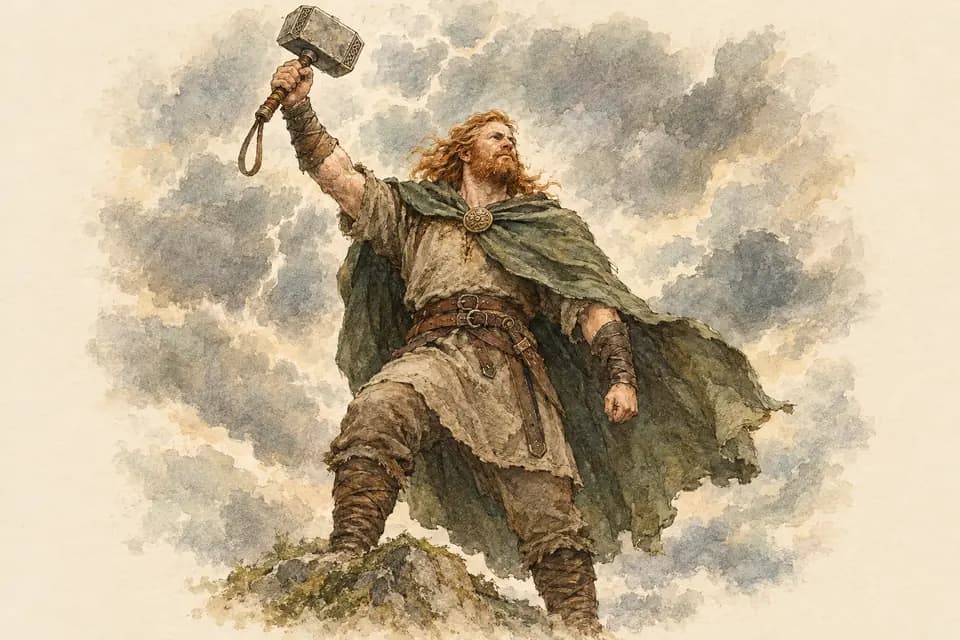
- ThorThunder
- FriggLove, Beloved
- LokiTricky, Mischief-maker
- HelHidden
Understanding Norse God names
Norse gods, also known as the Æsir, are deities from Norse mythology, originating from the Germanic peoples. They are associated with the cold and rugged landscapes of the North and are known for their warrior culture, epic tales, and influence on Viking traditions.
Their roots can evoke nature, kinship, fate, or the supernatural, while surviving myths preserve names for gods, giants, dwarves, and legendary women. Some names have clear translations; others are best understood through the character who bears them. For a story, choose a form that fits your setting’s level of historical detail, then consider whether its sound and mythic associations suit the character’s role.
How to come up with the perfect Norse God name
Norse god names often reflect their characteristics, domains, and connections to nature. Names like Odin, Thor, and Freyja are common among Norse gods.
How Norse names are formed
Many Old Norse personal names are compounds, joining two meaningful elements into one name. Elements associated with gods, battle, animals, or protection appear across the naming tradition. The original sense of some compounds is debated, so avoid assigning a precise translation unless it is well established. For a historically flavored setting, use a consistent spelling system rather than mixing Old Norse letters with modernized forms at random.
Roots, sounds, and mythic associations
A name can suggest a character through its sound as well as its lore. Names such as Sól and Máni refer to the sun and moon, while figures like Rán and Surtr carry strong mythic associations. Letters such as Þ and ð represent distinct sounds in Old Norse; they are often written th and d in simplified forms. Decide whether readers should see the original spelling or an accessible transliteration.
Choosing a name for your story
Start with the character’s place in the world: a deity, giant, dwarf, or mortal may call for different levels of grandeur. Check the name’s mythological role before borrowing it, since a familiar figure can bring a whole story with it. For mortals, consider a patronymic or descriptive byname rather than a modern hereditary surname. Keep names within a family or culture consistent in spelling and sound.
Popular Norse God names
Discover a world of Norse god names inspired by Viking legends and mythology:
| Name | Meaning | Gender |
|---|---|---|
| Odin | Frenzy, Inspiration | Male |
| Freyja | Lady, Noble Woman | Female |
| Thor | Thunder | Male |
| Loki | Tricky, Mischief-maker | Male |
| Frigg | Love, Beloved | Female |
| Baldr | Bold, Brave | Male |
| Hel | Hidden | Female |
| Tyr | God of War | Male |
| Sif | Bride | Female |
| Heimdall | Bright Sky | Male |
| Skadi | Harm, Scathe | Female |
| Bragi | Poet | Male |
| Idunn | Rejuvenating | Female |
| Forseti | Presiding, President | Male |
| Sigyn | Victorious Friend | Female |
| Njord | Sea | Male |
| Eir | Mercy, Help | Female |
| Vidar | Warrior | Male |
| Syn | Denial | Female |
| Mimir | Remembering | Male |
60 more Norse God names and meanings
Male Norse God names
| Name | Meaning |
|---|---|
| Búri | Primordial ancestor of the gods in Norse creation lore. |
| Borr | Son of Búri and father of the first gods. |
| Vili | One of the brothers who helped shape the world. |
| Vé | One of the brothers who helped shape the world. |
| Hœnir | God associated with the creation of humanity. |
| Váli | God born to avenge Baldr’s death. |
| Magni | Thor’s son, famed for great strength. |
| Móði | Thor’s son; his name is associated with courage. |
| Höðr | Blind god involved in Baldr’s death. |
| Ullr | God associated with archery, skiing, and winter. |
| Ægir | Sea giant who hosts the gods at feasts. |
| Kvasir | Wise being whose blood became the mead of poetry. |
| Hermóðr | God who rode to Hel seeking Baldr’s release. |
| Dagr | Personification of day. |
| Dellingr | Figure associated with dawn and the day’s coming. |
| Máni | Personification of the moon. |
| Nörvi | Figure named as the father of Nótt, night. |
| Þjazi | Powerful giant who abducted Iðunn. |
| Gymir | Giant and father of Gerðr in one account. |
| Suttungr | Giant who guarded the mead of poetry. |
| Surtr | Fire giant who battles the gods at Ragnarök. |
| Hymir | Giant who went fishing with Thor. |
| Þrymr | Giant who stole Thor’s hammer. |
| Hrungnir | Stone-hearted giant who fought Thor. |
| Geirröðr | Giant who tested Thor’s strength and cunning. |
| Fárbauti | Giant named as Loki’s father. |
| Narfi | Loki’s son in surviving mythic accounts. |
| Alvíss | Dwarf who sought to marry Thor’s daughter. |
| Andvari | Dwarf whose cursed hoard features in heroic legend. |
| Fornjótr | Ancient giant associated with wind, fire, and sea. |
Female Norse God names
| Name | Meaning |
|---|---|
| Gefjun | Goddess associated with ploughing and the island of Zealand. |
| Fulla | Goddess and trusted attendant of Frigg. |
| Gná | Goddess who carries Frigg’s messages across the worlds. |
| Lofn | Goddess associated with permission for lovers to marry. |
| Sjöfn | Goddess associated with love and affection. |
| Vár | Goddess who hears oaths and agreements. |
| Vör | Goddess described as wise and hard to deceive. |
| Hlín | Goddess associated with protection and consolation. |
| Snotra | Goddess associated with wisdom and good conduct. |
| Saga | Goddess who drinks with Odin in Sökkvabekkr. |
| Bil | Figure associated with the moon and a child in the sky. |
| Nanna | Baldr’s wife in Norse myth. |
| Rindr | Figure who becomes Váli’s mother in one account. |
| Gerðr | Beautiful giantess who marries Freyr. |
| Þrúðr | Thor’s daughter, whose name is associated with strength. |
| Þökk | Name used by Loki in disguise after Baldr’s death. |
| Hyrrokkin | Giantess who launched Baldr’s funeral ship. |
| Gunnlöð | Giantess who guarded the mead of poetry. |
| Bestla | Giantess named as Odin’s mother. |
| Jörð | Personification of Earth and Thor’s mother. |
| Rán | Sea goddess who gathers drowned sailors in her net. |
| Sól | Personification of the sun. |
| Nótt | Personification of night. |
| Hnoss | Freyja’s daughter, described as exceptionally beautiful. |
| Gersemi | Freyja’s daughter; her name suggests a precious treasure. |
| Urðr | One of the Norns, associated with what has become. |
| Verðandi | One of the Norns, associated with what is unfolding. |
| Skuld | One of the Norns, associated with what is owed or to come. |
| Brynhildr | Valkyrie and central figure in heroic legend. |
| Sigrún | Valkyrie in heroic poems about Helgi. |
Norse God last names
| Name | Meaning |
|---|---|
| Ragnarsson | Patronymic meaning son of Ragnarr. |
| Ragnarsdóttir | Patronymic meaning daughter of Ragnarr. |
| Eiríksson | Patronymic meaning son of Eiríkr. |
| Eiríksdóttir | Patronymic meaning daughter of Eiríkr. |
| Þórðarson | Patronymic meaning son of Þórðr. |
| Þórðardóttir | Patronymic meaning daughter of Þórðr. |
| Ketilsson | Patronymic meaning son of Ketill. |
| Ketilsdóttir | Patronymic meaning daughter of Ketill. |
| Bjarnarson | Patronymic meaning son of Bjǫrn. |
| Bjarnardóttir | Patronymic meaning daughter of Bjǫrn. |
| Hrafnsson | Patronymic meaning son of Hrafn. |
| Hrafnsdóttir | Patronymic meaning daughter of Hrafn. |
| inn rauði | Byname meaning the Red. |
| inn hvíti | Byname meaning the White. |
| inn grái | Byname meaning the Grey. |
| inn sterki | Byname meaning the Strong. |
| inn víðförli | Byname meaning the Far-traveled. |
| inn spaki | Byname meaning the Wise. |
| inn ungi | Byname meaning the Young. |
| inn gamli | Byname meaning the Old. |
Norse God names: frequently asked questions
What are common Norse names?
Norse sources include names for gods and other mythic figures as well as names borne by historical people. Names such as Ullr, Gefjun, and Nanna appear in myth, while compounds and patronymics were common in everyday naming. A name’s surviving form may vary between manuscripts or modern editions, so check spelling conventions before using it.
What does Sól mean?
Sól means “sun” in Old Norse and is also the name of the sun’s personification in Norse mythology. The related name Máni means “moon.” These are clear, direct meanings, unlike many mythic names whose original etymologies are uncertain or disputed.
Are Norse names the same as Viking names?
“Norse” usually refers to the language and culture of medieval Scandinavia, while “Viking” describes people engaged in seafaring raids, trade, or exploration. Many people called Vikings had Norse names, but the terms are not interchangeable. Mythic names like Gefjun come from Norse tradition; historical personal names can be researched in runic inscriptions and sagas.
How did Norse people form surnames?
Many used patronymics rather than fixed hereditary surnames. A man called Eiríkr might have a son named Eiríksson and a daughter named Eiríksdóttir, meaning “Eiríkr’s son” and “Eiríkr’s daughter.” Descriptive bynames, such as inn rauði (“the Red”), could also distinguish someone.
Other gods name generators
Chapter one starts tonight.
Open a blank page, write the first line, and see where it takes you. Your readers are out there.
Plans from $9.99 a month. Cancel any time. Your words are always yours.