
Understanding Hindu Names
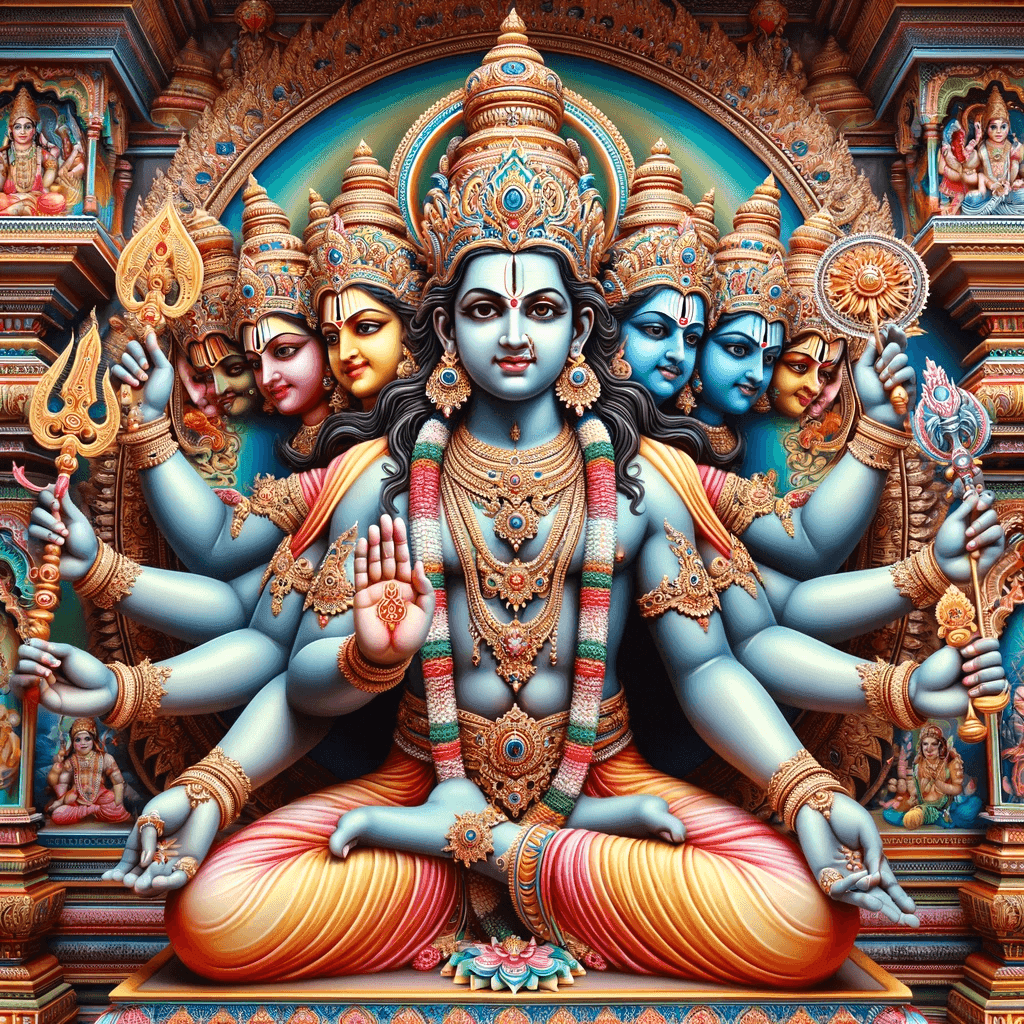
Hindu gods are the deities from Hindu mythology, a rich and diverse religious tradition with a vast pantheon of gods and goddesses. These deities are central to Hinduism and represent various aspects of life, nature, and spirituality. From Vishnu, the preserver, to Durga, the goddess of power, each Hindu god holds a unique place in the faith.
Hindu divine names come from many languages, eras and traditions, so they do not follow one naming pattern. Sanskrit names often combine meaningful elements or describe a deity’s qualities, while regional traditions contribute names in languages such as Tamil. Some names belong to Vedic deities; others are titles, stories or forms of worship that developed over centuries. For writers, a name can suggest a character’s domain, lineage or cultural setting, but it should not be treated as decorative shorthand. Consider the deity’s stories and living significance, and choose a name that fits your character without implying that all Hindu traditions are alike.
How to come up with the perfect Hindu name
Hindu god names often reflect the characteristics, attributes, and symbolism associated with each deity. Names like Krishna, Shiva, and Lakshmi are common among Hindu gods and goddesses.
How divine names are formed
Many Hindu deity names are Sanskrit words or compounds, while others come from regional languages and traditions. A name may identify a domain, quality, relationship or legendary deed. Annapurna, for instance, is associated with nourishment, while Vishvakarman is known as a divine craftsman. Some names are also epithets or titles rather than personal names in the modern sense. Check a name’s context before assigning it a specific meaning.
Roots, titles and traditions
Names in this collection draw on Vedic deities, epic and Puranic traditions, and regional forms of worship. A familiar name can have several interpretations, spellings or associations across communities. Sanskrit compounds may be rendered differently in English transliteration, and Tamil or other regional names follow their own linguistic histories. Hindu is a broad religious identity, not a single language or naming system, so avoid assuming every name belongs to the same tradition.
Choosing a name for a story
Start with the character’s setting and the qualities you want the name to evoke. A name tied to a river, harvest or craft can suggest a theme, but it also carries religious associations for many people. Check pronunciation and spelling, and research the deity’s stories before using a sacred name for a villain or comic character. For a fictional family, choose surnames with attention to region, language and community rather than mixing them at random.
Popular Hindu names
Explore a world of Hindu god names inspired by the profound mythology of India:
| Name | Meaning | Gender |
|---|---|---|
| Vishnu | The Preserver | Male |
| Lakshmi | Goddess of Wealth and Prosperity | Female |
| Shiva | The Destroyer | Male |
| Durga | Goddess of Power and Protection | Female |
| Brahma | The Creator | Male |
| Saraswati | Goddess of Knowledge and Arts | Female |
| Krishna | The Divine Playful God | Male |
| Parvati | Goddess of Love and Devotion | Female |
| Rama | Heroic Prince | Male |
| Kali | Goddess of Time and Change | Female |
| Hanuman | Monkey God of Devotion | Male |
| Ganesha | God of Wisdom and Beginnings | Male |
| Surya | Sun God | Male |
| Sita | Goddess of Virtue and Sacrifice | Female |
| Indra | King of the Gods | Male |
| Savitri | Goddess of Knowledge and Wisdom | Female |
| Yama | God of Death | Male |
| Kartikay | God of War | Male |
| Gayatri | Goddess of the Vedas | Female |
| Varuna | God of Water and Cosmic Order | Male |
| Radha | Goddess of Love and Devotion | Female |
60 more Hindu names and meanings
Male Hindu names
| Name | Meaning |
|---|---|
| Agni | Vedic fire deity associated with ritual and transformation. |
| Vayu | Deity of wind and vital breath. |
| Chandra | Moon deity; the name also means “shining” or “bright.” |
| Kubera | Deity associated with wealth and guardianship of treasures. |
| Kama | Deity of desire and love. |
| Dhanvantari | Divine healer associated with Ayurveda and medicinal knowledge. |
| Narada | Divine sage and traveling messenger in Hindu traditions. |
| Daksha | Prajapati, a progenitor figure in Hindu mythology. |
| Mitra | Vedic deity associated with friendship and agreements. |
| Pushan | Vedic deity who protects travelers, roads and herds. |
| Tvashtar | Vedic divine artisan and maker of celestial objects. |
| Bhaga | Vedic deity associated with good fortune and a share of prosperity. |
| Aryaman | Vedic deity associated with hospitality and social bonds. |
| Dattatreya | Deity and sage revered in several Hindu traditions. |
| Ayyappa | South Indian deity especially revered at Sabarimala. |
| Shani | Planetary deity associated with Saturn and karmic consequence. |
| Brihaspati | Vedic deity and teacher of the gods; also linked with Jupiter. |
| Nasatya | One of the Ashvin twins, associated with healing and rescue. |
| Parjanya | Vedic deity associated with rain and thunder. |
| Vishvakarman | Divine architect and craftsman in Hindu traditions. |
| Garuda | Divine bird and mount of Vishnu. |
| Ananta | “Endless”; also the cosmic serpent associated with Vishnu. |
| Hayagriva | Horse-headed form of Vishnu associated with knowledge. |
| Vamana | Dwarf avatar of Vishnu in Hindu mythology. |
| Narasimha | Man-lion avatar of Vishnu, a protector figure. |
| Matsya | Fish avatar of Vishnu, linked to a great flood story. |
| Kurma | Tortoise avatar of Vishnu, associated with the churning of the ocean. |
| Aniruddha | Deity in Vaishnava traditions and grandson of Krishna. |
| Kalki | Future avatar of Vishnu in many Hindu traditions. |
| Aapam Napat | Vedic deity whose name is commonly translated as “offspring of the waters.” |
Female Hindu names
| Name | Meaning |
|---|---|
| Aditi | Vedic mother of the gods; her name is associated with the unbounded. |
| Diti | Mother of the Daityas in Hindu mythology. |
| Ushas | Vedic goddess of dawn. |
| Prithvi | Earth goddess, often understood as the personified Earth. |
| Ganga | River goddess associated with the sacred Ganges. |
| Yamuna | River goddess associated with the Yamuna River. |
| Annapurna | Goddess of nourishment; her name suggests fullness of food. |
| Lalita | Goddess whose name is commonly translated as “playful” or “graceful.” |
| Tripurasundari | Goddess revered as the beauty of the three worlds. |
| Bhuvaneshwari | Goddess whose name means “sovereign of the worlds.” |
| Chinnamasta | Tantric Mahavidya goddess depicted holding her severed head. |
| Dhumavati | Mahavidya goddess associated with smoke and the inauspicious. |
| Bagalamukhi | Mahavidya goddess associated with stilling or restraining opponents. |
| Matangi | Tantric goddess associated with speech, music and learning. |
| Tara | Goddess revered in Hindu traditions; the name also means “star.” |
| Rati | Goddess associated with love and sensual desire. |
| Shachi | Goddess and consort of Indra, also known as Indrani. |
| Aranyani | Vedic goddess of forests and wilderness. |
| Ratri | Vedic goddess who personifies night. |
| Ila | Vedic feminine figure associated with speech, earth and ritual. |
| Manasa | Serpent goddess especially revered in parts of eastern India. |
| Mookambika | Goddess worshipped at Kollur and in neighboring regions. |
| Meenakshi | Goddess of Madurai; her name is often interpreted as “fish-eyed.” |
| Mariamman | South Indian village goddess associated with rain and protection. |
| Korravai | Ancient Tamil goddess associated with victory and warfare. |
| Renuka | Goddess revered in several regional traditions and mother of Parashurama. |
| Hinglaj | Goddess worshipped at a major Shakti pilgrimage site in Balochistan. |
| Santoshi | Goddess whose name means “contentment” or “satisfaction.” |
| Sheetala | Goddess traditionally invoked for protection from fever and disease. |
| Vishalakshi | Goddess of Varanasi; her name means “wide-eyed.” |
Hindu last names
| Name | Meaning |
|---|---|
| Sharma | A widely used surname, especially in northern India; usage varies by region and community. |
| Verma | A surname found across several regions and communities; also spelled Varma. |
| Gupta | A widespread surname with varied regional and community associations. |
| Mishra | A surname particularly common in northern and eastern India. |
| Joshi | A surname found in several regions, especially western and northern India. |
| Trivedi | A surname used especially in western and northern India; regional associations vary. |
| Iyer | A Tamil surname and title associated particularly with Tamil Brahmin communities. |
| Iyengar | A Tamil surname associated with Sri Vaishnava communities. |
| Nair | A surname and community name associated especially with Kerala. |
| Menon | A surname and historical title associated especially with Kerala. |
| Pillai | A title and surname used by multiple communities in South India. |
| Rao | A title and surname used across several regions and communities. |
| Reddy | A surname and community name especially associated with Andhra Pradesh and Telangana. |
| Patel | A surname especially associated with Gujarat and with communities beyond it. |
| Desai | A surname and historical title found especially in western India. |
| Kulkarni | A Maharashtra and Karnataka surname historically associated with village record-keeping. |
| Mukherjee | An anglicized form of a Bengali surname, also written Mukhopadhyay. |
| Banerjee | An anglicized form of a Bengali surname, also written Bandyopadhyay. |
| Chatterjee | An anglicized form of a Bengali surname, also written Chattopadhyay. |
| Singh | A surname and title meaning “lion,” used by people of several religions and communities. |
Hindu names: frequently asked questions
What are common Hindu deity names?
Names vary across regions and traditions. Agni, Chandra and Vayu come from Vedic traditions, while Ayyappa and Meenakshi are especially associated with South Indian worship. A name’s popularity as a personal name can differ from its importance as a deity’s name, so check the character’s regional and family context.
What does Aditi mean?
Aditi is a Vedic goddess and mother of the Adityas. Her name is commonly connected with the Sanskrit idea of being unbounded or limitless. She appears in ancient hymns and later Hindu traditions, so the name can suggest expansiveness as well as a specific religious figure.
Are names of Hindu gods used as personal names?
Yes. Many deity names are also given names, though usage differs by language, region, family and tradition. Chandra, Aditi and Ananta, for example, can be used as personal names as well as names connected with divine figures. Some names may feel strongly devotional or be used chiefly in particular communities.
Do Hindu names have different spellings in English?
Often. Sanskrit and regional-language sounds are represented in English through transliteration, and conventions differ. Vishvakarman, for example, may appear with a different final vowel in some texts; Tamil names also have multiple established spellings. For a story, choose a consistent spelling and consider the language and setting you are representing.


